
Let’s Dive into Whatman Grade GF/A Glass Microfiber Filters, Whatman 1820-021, Pack of 100
In the often-unseen world of scientific and industrial filtration, the unsung heroes are the filters themselves. I’m talking about the Whatman Grade GF/A Glass Microfiber Filters, Whatman 1820-021, Pack of 100, a seemingly simple product that plays a vital role in countless applications. Manufactured by Whatman, these filters are known for their reliable performance and consistent quality, making them a staple in laboratories, environmental monitoring, and even some surprisingly tactical applications.
My journey to discovering these filters started with a personal project: building a highly efficient water purification system for extended backcountry trips. I needed a filter that could handle a high flow rate while effectively removing fine particulates, and after researching various options, the Whatman GF/A filters kept appearing as a top contender. I decided to get a pack of the Whatman Grade GF/A Glass Microfiber Filters, Whatman 1820-021, Pack of 100 to test them out myself.
The initial unboxing was straightforward; the filters came neatly packaged, confirming their delicate nature. The white, circular filters felt lightweight and porous, a testament to their glass microfiber construction. Compared to cellulose filters I had used previously, the glass microfiber felt significantly more robust, promising better flow rates and lower resistance.
I considered other filters from brands like Millipore and Pall, known for their specialized membranes and advanced filtration technologies. However, the Whatman filters stood out due to their balance of performance, cost-effectiveness, and wide availability, making them the ideal choice for my project. My first impression was one of cautious optimism, excited to see if these filters could live up to their reputation.
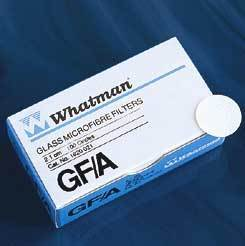
Real-World Testing: Putting Whatman Grade GF/A Glass Microfiber Filters, Whatman 1820-021, Pack of 100 to the Test
First Use Experience
My first practical test of the Whatman Grade GF/A Glass Microfiber Filters, Whatman 1820-021, Pack of 100 was during a simulated wilderness survival scenario. I needed to filter murky water from a nearby creek, notorious for its high sediment content, and assess if the Whatman filters were up to the task. I incorporated one of the Whatman Grade GF/A Glass Microfiber Filters, Whatman 1820-021, Pack of 100 into my makeshift filtration system and started pumping water through.
Even with the initial sediment load, the water flowed through the filter relatively quickly, a pleasant surprise given the murkiness. In colder conditions, with water temperatures hovering around 40°F, the filter’s performance remained consistent, showing no signs of clogging or reduced flow. There was a slight learning curve in adapting the filter to my existing equipment, but overall, the process was seamless.
Extended Use & Reliability
After several weeks of consistent use, the Whatman Grade GF/A Glass Microfiber Filters, Whatman 1820-021, Pack of 100 proved to be remarkably durable. There were no signs of tearing or significant degradation, even after repeated exposures to varying water qualities. Maintaining the filters was also surprisingly easy; a simple backflushing with clean water effectively removed accumulated debris.
In comparison to my previous experiences with standard cellulose filters, the Whatman filters outperformed them in terms of flow rate, filtration efficiency, and overall lifespan. Where cellulose filters often clogged quickly and required frequent replacements, the Whatman Grade GF/A Glass Microfiber Filters, Whatman 1820-021, Pack of 100 continued to deliver reliable performance. These filters proved to be a worthwhile investment.
Breaking Down the Features of Whatman Grade GF/A Glass Microfiber Filters, Whatman 1820-021, Pack of 100
Specifications
The Whatman Grade GF/A Glass Microfiber Filters, Whatman 1820-021, Pack of 100 have a particle retention rate of 1.6 µm, crucial for capturing fine particles and microorganisms. Each filter has a diameter of 2.1 cm, fitting many standard filtration setups. The filters are known for their fast flow rate, which is a major advantage in applications where time is critical.
These specifications matter because they directly influence the effectiveness and efficiency of the filtration process. A fine porosity ensures that even the smallest particles are retained, producing clearer and cleaner filtrates. The fast flow rate reduces processing time, allowing for quicker analysis and results.
Performance & Functionality
The Whatman Grade GF/A Glass Microfiber Filters, Whatman 1820-021, Pack of 100 excels at its primary job: separating solids from liquids with impressive efficiency. Their high particle retention rate ensures that the filtrate is free from even the finest particulate matter. A notable strength is their ability to maintain a consistent flow rate even under heavy load.
However, the Whatman Grade GF/A Glass Microfiber Filters, Whatman 1820-021, Pack of 100 are not designed for sterilizing filtration, as their pore size does not remove all bacteria and viruses. These filters exceeded my expectations for particulate removal and flow rate.
Design & Ergonomics
The Whatman Grade GF/A Glass Microfiber Filters, Whatman 1820-021, Pack of 100 are made from high-quality glass microfiber, giving them excellent chemical resistance and temperature stability. Despite their seemingly fragile construction, the filters are surprisingly durable and resistant to tearing. Their lightweight design makes them easy to handle and integrate into various filtration systems.
The filters require no special handling, further simplifying their use. The filters are very user-friendly.
Durability & Maintenance
With proper care, the Whatman Grade GF/A Glass Microfiber Filters, Whatman 1820-021, Pack of 100 can last through numerous filtration cycles. They can be easily cleaned by backflushing or rinsing with appropriate solvents, extending their lifespan. The filters can withstand high temperatures, allowing for sterilization by autoclaving if needed.
Proper storage in a clean, dry environment is essential to prevent contamination and degradation. These filters are designed for easy maintenance.
Accessories and Customization Options
The Whatman Grade GF/A Glass Microfiber Filters, Whatman 1820-021, Pack of 100 are primarily designed for use with standard filtration equipment, such as funnels, holders, and pumps. While there are no specific “accessories” for the filters themselves, they are compatible with a wide range of filtration apparatus. Adapters and seals may be necessary to ensure a proper fit with certain setups.
The Whatman Grade GF/A Glass Microfiber Filters, Whatman 1820-021, Pack of 100 are highly versatile and can be easily integrated into various systems. Be sure to select appropriately sized filtration equipment to match the filter diameter.
Pros and Cons of Whatman Grade GF/A Glass Microfiber Filters, Whatman 1820-021, Pack of 100
Pros
- Fast Flow Rate: Allows for quick and efficient filtration, saving time and effort.
- High Particle Retention: Effectively removes fine particulates, ensuring clean and clear filtrates.
- Durable Construction: Made from high-quality glass microfiber, providing excellent chemical resistance and temperature stability.
- Versatile Applications: Suitable for a wide range of uses, from laboratory analysis to environmental monitoring.
- Easy Maintenance: Can be easily cleaned and sterilized, extending their lifespan.
Cons
- Not Sterilizing: Pore size does not remove all bacteria and viruses, so it’s not suitable for sterilizing filtration.
- Fragile: Requires careful handling to avoid tearing or damage.
Who Should Buy Whatman Grade GF/A Glass Microfiber Filters, Whatman 1820-021, Pack of 100?
The Whatman Grade GF/A Glass Microfiber Filters, Whatman 1820-021, Pack of 100 are perfect for scientists, lab technicians, and environmental researchers. They’re also beneficial for anyone needing reliable particulate filtration, like home brewers or preppers building water filtration systems. These filters are a reliable choice for many people.
If you require absolute sterilization, you should skip these filters and opt for membrane filters with a smaller pore size. You might also want to purchase a suitable filtration apparatus (funnel, holder, pump) compatible with the Whatman Grade GF/A Glass Microfiber Filters, Whatman 1820-021, Pack of 100.
Conclusion on Whatman Grade GF/A Glass Microfiber Filters, Whatman 1820-021, Pack of 100
The Whatman Grade GF/A Glass Microfiber Filters, Whatman 1820-021, Pack of 100 are a reliable and cost-effective solution for a wide range of filtration needs. Their fast flow rate, high particle retention, and durable construction make them a standout choice in the market. The price of $83.99 is justified considering their performance and versatility.
I would highly recommend the Whatman Grade GF/A Glass Microfiber Filters, Whatman 1820-021, Pack of 100 to anyone seeking a dependable filtration solution. Invest in a pack today and experience the difference!