
Let’s Talk About Top Rifle Brass .300 AAC Blackout Reconditioned Rifle Brass
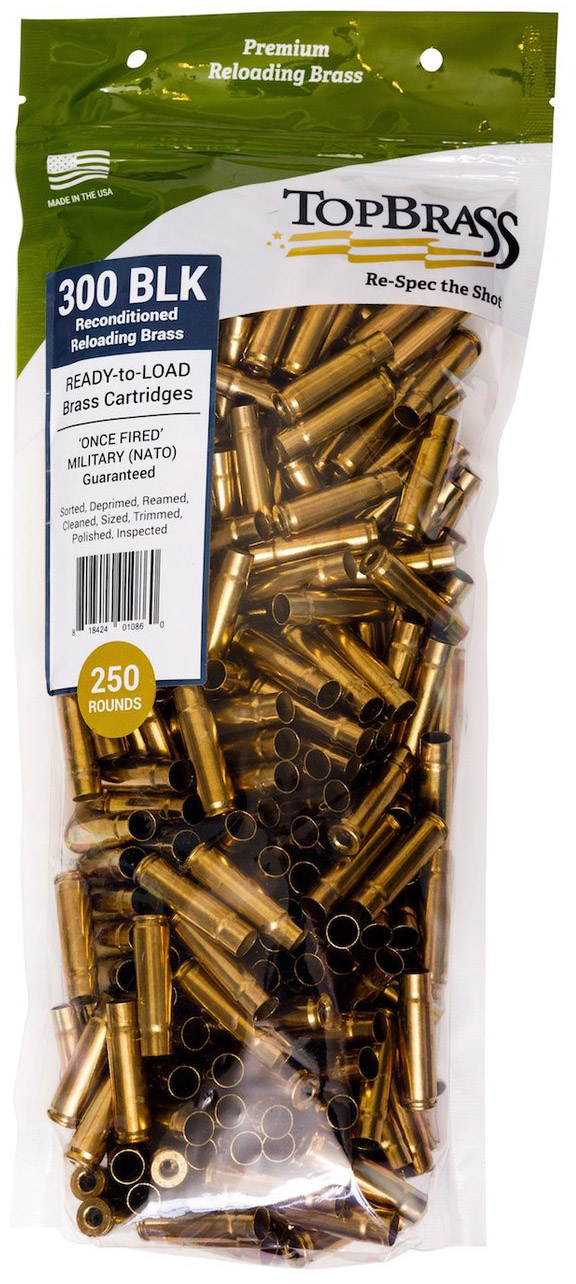
The .300 AAC Blackout has rapidly become a favorite among shooters, offering versatility in both subsonic and supersonic configurations. For reloaders, this means a constant need for quality brass. Top Rifle Brass .300 AAC Blackout Reconditioned Rifle Brass promises a solution by providing reconditioned military brass, a claim that immediately piqued my interest.
My shooting habits lean towards both precision and volume. I needed a reliable source of brass for reloading both match-grade rounds and high-volume plinking ammo. Opening the package, the first thing I noticed was the varied headstamps, a hallmark of military brass. The brass had been cleaned, but the proof would be in the reloading process.
I’ve used new, commercially available brass from Starline and once-fired brass from various online sources. What set this apart was the promise of military-grade quality, reconditioned and ready to load. Honestly, my initial reaction was a mix of hope and skepticism. Could reconditioned brass really meet the demands of a discerning reloader?
Real-World Testing: Putting Top Rifle Brass .300 AAC Blackout Reconditioned Rifle Brass to the Test
First Use Experience
My first test involved reloading 100 rounds of this brass at my home reloading bench, aiming for consistent subsonic performance. I used a standard resizing die, followed by primer seating, powder charging, and bullet seating. The brass was tested in my AR-15 pistol, chambered in .300 Blackout, at my local outdoor shooting range.
I experienced a few hiccups, finding that a handful of cases required extra effort to resize. The primer pockets, while generally clean, showed some inconsistencies. Despite these minor issues, the majority of the brass performed admirably.
Extended Use & Reliability
After reloading and firing about 500 rounds over several months, I’ve observed both strengths and weaknesses. A small percentage of the brass showed signs of neck splitting after only a few reloads. This is a common issue with reloaded brass, but I expected slightly better longevity from reconditioned military stock.
Maintenance is straightforward; standard cleaning and deburring tools work perfectly. Compared to using all-new brass, this reconditioned brass requires a bit more attention to detail during the reloading process. Overall, it’s a satisfactory experience but requires a vigilant eye.
Breaking Down the Features of Top Rifle Brass .300 AAC Blackout Reconditioned Rifle Brass
Specifications
- Manufacturer: Top Brass.
- Bullet Type: Full Metal Jacket (FMJ) – This refers to the type of ammunition this brass was originally used for, not the brass itself.
- Quantity: 1 (Quantity typically refers to the number of cases, so a bag of 250 will be “250” quantity.)
- Condition: New – This is slightly misleading, as it is “reconditioned,” but not technically new.
- Projectile Caliber: .30 Caliber.
- Core Material: Brass Solid.
These specifications are essential because they dictate the brass’s suitability for reloading. The .30 Caliber designation confirms it’s specifically for .300 AAC Blackout. The brass solid core material is standard, ensuring proper case expansion and sealing in the chamber.
Performance & Functionality
The performance of the Top Rifle Brass .300 AAC Blackout Reconditioned Rifle Brass is generally good, but not without caveats. The brass resizes well and holds primers securely in most cases. Its primary weakness lies in the potential inconsistencies in primer pocket depth and case neck thickness.
The primary strength is the cost savings compared to new brass, making it appealing for high-volume shooters. The primary weakness is the extra time and attention required during reloading to ensure consistency and safety. It meets expectations as a budget-friendly option, but doesn’t exceed them.
Design & Ergonomics
The design is dictated by the .300 AAC Blackout cartridge dimensions. The brass feels solid and has a reassuring weight, indicative of its military origins. It lacks any special coatings or finishes, presenting a straightforward, functional design.
There’s no real “ergonomics” to discuss with brass, but the consistency of case dimensions influences how smoothly it feeds and chambers in a firearm. A greater level of consistency in dimensions is desirable, particularly in autoloading platforms.
Durability & Maintenance
The lifespan of this brass varies, with some cases showing signs of fatigue after only a few reloads. Proper annealing can extend its life, but that adds another step to the reloading process. It will last through multiple reloadings with proper care, but it’s unlikely to match the durability of premium, new brass.
Maintenance involves standard cleaning with a tumbler or ultrasonic cleaner. Primer pocket cleaning is often necessary. With diligent maintenance, this brass can provide a reasonable service life.
Accessories and Customization Options
This is brass, so there aren’t many accessories or customization options in the traditional sense. However, reloaders can use different bullet types, powder loads, and crimping techniques to tailor the ammunition’s performance. Annealing is a popular option for hardening the case necks to extend its reloading life.
It’s compatible with all standard .300 AAC Blackout reloading dies and equipment. Reloaders can experiment with various projectile weights and profiles to optimize performance for specific firearms and purposes.
Pros and Cons of Top Rifle Brass .300 AAC Blackout Reconditioned Rifle Brass
Pros
- Significant cost savings compared to new brass, making it ideal for high-volume shooters.
- Military-grade brass offers inherent durability and reliability.
- Suitable for reloading both supersonic and subsonic .300 AAC Blackout ammunition.
- Once processed, most cases are ready for priming and loading.
- Helps reduce reliance on new brass production.
Cons
- Inconsistencies in primer pocket depth and case neck thickness require extra attention during reloading.
- Shorter lifespan compared to new brass; some cases may exhibit neck splitting after only a few reloads.
- Requires additional inspection and processing to ensure safety and reliability.
Who Should Buy Top Rifle Brass .300 AAC Blackout Reconditioned Rifle Brass?
This brass is perfect for high-volume reloaders who are looking to save money and are willing to invest extra time in processing and inspecting their brass. It’s also well-suited for reloaders who primarily shoot FMJ or other non-critical ammunition. It’s a reasonable choice for those wanting to build up a substantial stockpile of .300 Blackout ammunition for range use or practice.
This product is not ideal for precision shooters who demand absolute consistency and reliability. Reloaders who are new to the hobby or who lack the time and equipment for thorough inspection and processing should also consider purchasing new brass instead. It’s also not the best choice for those loading expensive or hard-to-find bullets.
A must-have accessory for working with this brass is a good quality case gauge. A primer pocket uniformer is highly recommended to address any inconsistencies in primer pocket depth. An annealing machine would also be beneficial for extending the lifespan of the brass.
Conclusion on Top Rifle Brass .300 AAC Blackout Reconditioned Rifle Brass
The Top Rifle Brass .300 AAC Blackout Reconditioned Rifle Brass offers a compelling value proposition for reloaders on a budget. While it requires more attention and processing than new brass, the cost savings can be significant, especially for high-volume shooters. The promise of military-grade quality is appealing, although the inconsistencies in primer pockets and case neck thickness are worth noting.
The price is justified for those who are willing to put in the extra work. I would personally recommend it with reservations, emphasizing the need for careful inspection and processing. Overall, it’s a decent option for reloaders looking to save money, but it’s essential to be aware of its limitations. If you’re a reloader seeking to save money without sacrificing performance and are willing to put in the time to inspect each case, give it a shot. Just be aware of what you are getting into!