
First Impressions of ProMag Polymer Smith & Wesson Bodyguard .380 ACP 32-Round Pistol Magazine
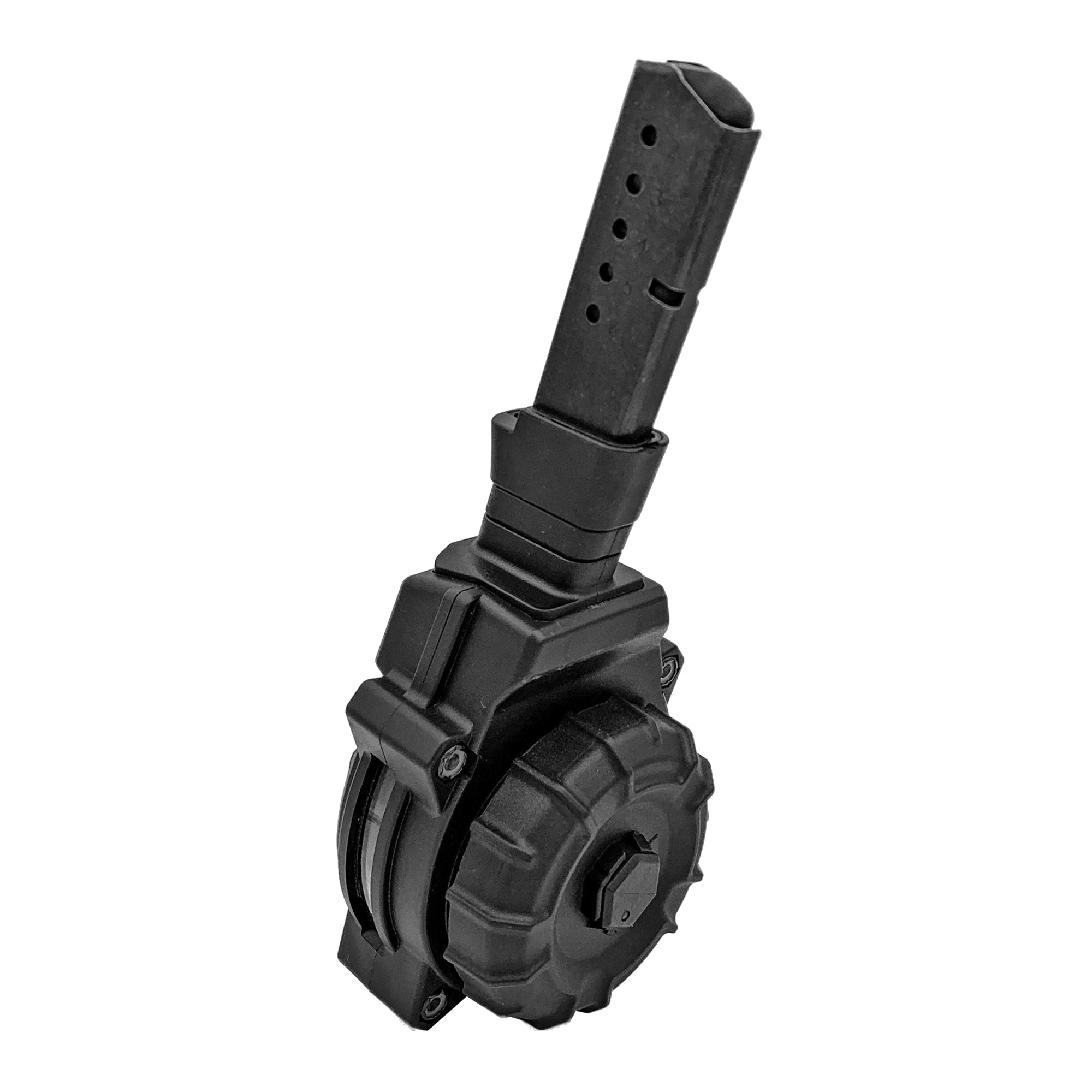
The ProMag Polymer Smith & Wesson Bodyguard .380 ACP 32-Round Pistol Magazine promises to significantly boost the firepower of the easily concealable Bodyguard .380. With a staggering 32-round capacity, this magazine aims to transform a pocket pistol known for its limited rounds into something approaching a mini-carbine. The question, however, is whether ProMag can deliver on this promise without sacrificing reliability or practicality.
For years, I’ve carried a Bodyguard .380 as a backup gun, often in situations where discretion was paramount. The low capacity always nagged at me, a constant reminder that I was trading off firepower for concealability. I needed a way to dramatically increase the round count without switching to a larger platform, and the ProMag seemed like it might be the answer.
Upon receiving the magazine, my first impression was dominated by its sheer size. It’s noticeably long, dwarfing the original six-round magazine. The polymer construction felt reasonably solid, though perhaps a bit less premium than the factory magazine’s steel. I immediately compared it to a couple of extended magazines I use for my Glock 19 and Sig P365, and the ProMag appeared to be roughly the same length, only wider.
I considered options from other manufacturers, including those that offered smaller capacity extensions or higher-quality metal magazines. Ultimately, the allure of 32 rounds – even if it meant potentially sacrificing some reliability – was too strong to ignore. My first impression was cautiously optimistic. I was both excited by the potential and apprehensive about whether it would actually function reliably.
Real-World Testing: Putting ProMag Polymer Smith & Wesson Bodyguard .380 ACP 32-Round Pistol Magazine to the Test
First Use Experience
My first test of the ProMag Polymer Smith & Wesson Bodyguard .380 ACP 32-Round Pistol Magazine was at my local indoor shooting range. I wanted a controlled environment to assess its performance and identify any immediate issues. The magazine was fully loaded with standard FMJ .380 ammunition.
Initially, the magazine seemed to function smoothly, chambering the first round without issue. However, after firing approximately 10 rounds, I experienced the first of several failures to feed. The slide would lock back prematurely, even with rounds remaining in the magazine. After a few more attempts, the problems persisted, with failures occurring every few rounds.
Extended Use & Reliability
Over the next few weeks, I continued to test the ProMag Polymer Smith & Wesson Bodyguard .380 ACP 32-Round Pistol Magazine in various scenarios. I took it to an outdoor range, exposing it to dusty conditions, and even tried it in slightly colder temperatures. The reliability issues remained consistent.
Durability-wise, the magazine held up reasonably well. There were no visible cracks or significant wear marks on the polymer body. Cleaning was relatively straightforward; however, disassembling the magazine for a deep clean proved to be more challenging than with the factory magazine. Compared to my experiences with factory magazines, the ProMag fell far short in terms of reliability. I expected occasional issues with such a high-capacity magazine, but the consistent failures were a major disappointment.
Breaking Down the Features of ProMag Polymer Smith & Wesson Bodyguard .380 ACP 32-Round Pistol Magazine
Specifications
The ProMag Polymer Smith & Wesson Bodyguard .380 ACP 32-Round Pistol Magazine is designed specifically for the Smith & Wesson M&P Bodyguard 380 pistol. It is chambered in .380 ACP and boasts a magazine capacity of 32 rounds. The magazine body is constructed from a DuPont Zytel based polymer, with an injection-molded follower.
The magazine spring is formed from heat-treated chrome silicon wire. These specifications are significant because they determine the magazine’s capacity, durability, and feeding reliability. The high capacity is the primary selling point, while the polymer construction aims to balance weight and durability. The quality of the spring and follower are critical for ensuring reliable feeding.
Performance & Functionality
In terms of performance, the ProMag Polymer Smith & Wesson Bodyguard .380 ACP 32-Round Pistol Magazine is severely hampered by its reliability issues. While it initially appears to function correctly, frequent failures to feed make it unsuitable for any serious defensive purpose. Its primary strength lies in its high capacity, but this is negated by its unreliability. It significantly falls short of expectations.
The magazine’s weakness is clearly its feeding mechanism. While the polymer body seems durable enough, the spring and follower do not consistently deliver rounds into the chamber. This results in frequent stoppages and undermines the entire purpose of a high-capacity magazine.
Design & Ergonomics
The build quality of the ProMag Polymer Smith & Wesson Bodyguard .380 ACP 32-Round Pistol Magazine is acceptable, but not exceptional. The polymer feels reasonably sturdy, but it lacks the premium feel of metal magazines. The extended length of the magazine makes the Bodyguard .380 awkward to hold and carry. There is no learning curve to loading and using it, however.
Durability & Maintenance
The magazine appears to be reasonably durable. The polymer body shows no signs of cracking or deformation after repeated use and loading. Maintenance is relatively straightforward, though disassembling the magazine can be challenging. The overall durability seems adequate for range use, but the reliability issues overshadow this advantage.
Accessories and Customization Options
The ProMag Polymer Smith & Wesson Bodyguard .380 ACP 32-Round Pistol Magazine does not come with any additional accessories. There are no readily available customization options for the magazine itself. Compatibility with aftermarket accessories is limited. This is a standalone product with a specific purpose: increasing the magazine capacity of the Bodyguard .380.
Pros and Cons of ProMag Polymer Smith & Wesson Bodyguard .380 ACP 32-Round Pistol Magazine
Pros
- Significantly increased magazine capacity: Transforms the Bodyguard .380 into a higher-capacity platform.
- Polymer construction: Keeps the magazine relatively lightweight.
- Easy to load: No significant difficulty in loading rounds into the magazine.
Cons
- Unreliable feeding: Frequent failures to feed make it unsuitable for defensive use.
- Awkward ergonomics: The extended length makes the pistol difficult to handle and conceal.
- Questionable durability: While seemingly durable, reliability issues raise concerns about overall longevity.
Who Should Buy ProMag Polymer Smith & Wesson Bodyguard .380 ACP 32-Round Pistol Magazine?
The ProMag Polymer Smith & Wesson Bodyguard .380 ACP 32-Round Pistol Magazine might be suitable for recreational shooters who want to experiment with a high-capacity magazine at the range, and are willing to accept frequent malfunctions. It is not recommended for anyone who relies on their Bodyguard .380 for self-defense. Anyone needing reliable performance should avoid this product. A must-have modification would be a significantly stronger spring, if one were available, but that’s not guaranteed to fix the underlying issues.
Conclusion on ProMag Polymer Smith & Wesson Bodyguard .380 ACP 32-Round Pistol Magazine
The ProMag Polymer Smith & Wesson Bodyguard .380 ACP 32-Round Pistol Magazine offers the tantalizing promise of significantly increased firepower for the diminutive Bodyguard .380. Unfortunately, the promise remains largely unfulfilled due to persistent reliability issues. The price of $89.99 is not justified given the magazine’s performance. I cannot personally recommend it for any serious purpose. It’s a range toy at best, and a potential liability at worst. Proceed with extreme caution.