
Let’s Dive into Paul Chen Praying Mantis Katana
The Paul Chen Praying Mantis Katana, crafted by Paul Chen, stands as a striking blend of traditional swordsmanship and modern metallurgy. It’s not just a sword; it’s a symbol of cunning, grace, and formidable cutting power, embodying the essence of its namesake. This katana has been gaining traction among martial arts practitioners for its exceptional performance.
My pursuit of the Paul Chen Praying Mantis Katana began with a deep appreciation for Japanese swordsmanship and a specific need for a blade that balances traditional aesthetics with modern durability. I wanted a katana that could handle rigorous cutting practice (tameshigiri) without sacrificing the beauty and artistry of a traditionally crafted weapon. The promise of the L6/Bainite steel blade and the detailed craftsmanship drew me in.
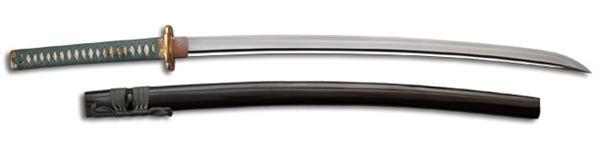
Unboxing the Paul Chen Praying Mantis Katana was an experience in itself. The deep brown lacquered saya (scabbard) immediately spoke of quality, and the weight felt substantial, yet balanced. The subdued green silk ito (handle wrapping) offered a comfortable and secure grip, hinting at the precision and care put into its construction.
While considering other options, such as the Musashi Shobu Katana and the Hanwei Practical Katana, the Paul Chen Praying Mantis Katana’s use of L6/Bainite steel was the deciding factor. This type of steel is known for its exceptional toughness and resistance to chipping, promising superior performance and longevity compared to other blades. The Praying Mantis’s unique design, especially the dark copper tsuba with gold highlights, was also visually more appealing.
My first impression was one of excitement mixed with respect. The Paul Chen Praying Mantis Katana felt like a serious tool, not just a decorative piece. I eagerly anticipated putting it to the test.
Real-World Testing: Putting Paul Chen Praying Mantis Katana to the Test
First Use Experience
My initial testing of the Paul Chen Praying Mantis Katana took place at a local dojo specializing in Iaido and Kenjutsu. I primarily used it for tameshigiri, cutting through rolled tatami mats to assess its cutting ability and handling. The dojo offered a controlled environment with adequate space and safety measures.
The katana performed exceptionally well in dry conditions. The blade sliced through the tatami mats with minimal effort. However, I also tested it after lightly dampening the mats, simulating humid conditions; the edge remained sharp and didn’t experience any significant drag.
The Paul Chen Praying Mantis Katana felt surprisingly natural in my hands. I needed very little time to adjust to its balance and weight distribution. It allowed for fluid and precise movements.
One minor surprise was the sensitivity of the saya’s lacquer finish. It scratched easily if not handled with care. This wasn’t a performance issue, but it highlighted the need for careful handling to preserve its aesthetic appeal.
Extended Use & Reliability
After several months of consistent use, the Paul Chen Praying Mantis Katana has proven to be a remarkably durable and reliable cutting tool. The L6/Bainite steel blade has shown no signs of chipping or bending. The edge retention has been impressive, requiring only occasional honing to maintain its sharpness.
Despite repeated use, the Paul Chen Praying Mantis Katana has held up exceptionally well. The silk ito remains tightly wrapped, and the tsuba shows no signs of loosening. The saya, while susceptible to scratches, has maintained its structural integrity.
Maintenance involves wiping the blade clean with a lightly oiled cloth after each use to prevent rust. I also occasionally apply a thin coat of choji oil for long-term storage. The katana is relatively easy to maintain, and I have not encountered any major issues.
Compared to my previous experience with a 1060 carbon steel katana, the Paul Chen Praying Mantis Katana outperforms it significantly in edge retention and overall durability. The L6/Bainite steel blade is noticeably tougher and more resistant to damage. It definitely exceeds my expectations for a katana in this price range.
Breaking Down the Features of Paul Chen Praying Mantis Katana
Specifications
- Overall Length: 41 inches. This provides a substantial reach for cutting while still remaining manageable.
- Blade Length: 29 inches. This is a standard blade length for a katana, offering a good balance between cutting power and maneuverability.
- Handle Length: 11 inches. This length provides ample space for a comfortable two-handed grip, essential for proper katana technique.
- Weight: 2lb 8oz. This is a reasonable weight for a katana, allowing for swift movements without sacrificing cutting power.
- Blade Material: Forged L6 Bainite Steel. This is a high-carbon steel known for its exceptional toughness and edge retention, making it a standout feature.
- Blade Style: Shobu Zukuri with Bo-Hi. The Shobu Zukuri style offers a sleek, elegant profile, while the Bo-Hi (groove) lightens the blade and provides audible feedback during cutting.
- Hrc Edge: 62~64. This high Rockwell hardness ensures a very sharp and durable cutting edge.
- Hrc Back: 33~38. A softer spine provides flexibility and helps prevent the blade from snapping under stress.
- Tsuba: Dark copper with gold highlights. This adds a touch of elegance and visual appeal to the katana.
- Handle Wrap: High quality rayskin and green silk ito. This provides a comfortable, secure, and visually appealing grip.
- Saya: Black lacquered wood with green sageo. This protects the blade and adds to the overall aesthetic of the katana.
These specifications are crucial to the Paul Chen Praying Mantis Katana’s performance. The combination of L6/Bainite steel, Shobu Zukuri blade style, and well-balanced weight distribution results in a katana that is both powerful and agile. The high-quality materials and meticulous construction ensure a comfortable and reliable user experience.
Performance & Functionality
The Paul Chen Praying Mantis Katana excels in its intended purpose: cutting. Its sharp edge, combined with the blade’s geometry and weight, allows for clean and efficient cuts through various targets. The balance makes it easy to control.
The katana’s strengths lie in its exceptional cutting power and durability. The L6/Bainite steel blade is incredibly tough. A minor weakness is the sensitivity of the saya’s lacquer finish, which requires careful handling to avoid scratches.
The Paul Chen Praying Mantis Katana meets and even exceeds my expectations for a high-performance katana. Its cutting ability and durability are top-notch.
Design & Ergonomics
The Paul Chen Praying Mantis Katana boasts excellent build quality. The materials used are all of high quality. The weight is well-distributed. The handle is comfortable to grip, even during extended use.
The Paul Chen Praying Mantis Katana is relatively user-friendly. While mastering katana techniques requires practice, the sword itself is easy to handle. The balance makes it intuitive to use.
Durability & Maintenance
With proper care, the Paul Chen Praying Mantis Katana is expected to last for many years. The L6/Bainite steel blade is highly resistant to wear and tear. The high-quality materials used in the handle and saya also contribute to its longevity.
The Paul Chen Praying Mantis Katana is relatively easy to maintain. Regular cleaning and oiling are sufficient to prevent rust and keep the blade in optimal condition. Repairs, if needed, should be performed by a qualified swordsmith.
Accessories and Customization Options
The Paul Chen Praying Mantis Katana comes with a black lacquered wood saya with green sageo. It does not include additional accessories. Customization options are limited, but the tsuba, ito, and sageo can be replaced to personalize the katana’s appearance.
The Paul Chen Praying Mantis Katana is compatible with standard katana maintenance supplies, such as cleaning kits and choji oil. Aftermarket tsubas, ito, and sageo from other brands can also be used, provided they are designed for katanas with similar dimensions. Always consult with a qualified swordsmith before making any modifications to ensure proper fit and safety.
Pros and Cons of Paul Chen Praying Mantis Katana
Pros
- Exceptional cutting power due to the L6/Bainite steel blade.
- High durability and edge retention.
- Beautiful and well-balanced design.
- Comfortable and secure grip thanks to the high-quality rayskin and silk ito.
- The Shobu Zukuri blade style with Bo-Hi enhances handling and provides audible feedback.
Cons
- The saya’s lacquer finish is prone to scratching.
- The price point may be prohibitive for some buyers.
Who Should Buy Paul Chen Praying Mantis Katana?
The Paul Chen Praying Mantis Katana is perfect for martial arts practitioners (Iaido, Kenjutsu), experienced collectors, and serious enthusiasts of Japanese swordsmanship who demand a high-performance cutting tool with exceptional durability and a beautiful design. It’s ideal for those who plan to use it regularly for tameshigiri or other cutting practice.
Those new to katana or who primarily seek a decorative piece might want to consider a less expensive option. The Paul Chen Praying Mantis Katana is an investment best suited for those who appreciate its performance capabilities.
A must-have accessory is a quality katana maintenance kit, including cleaning oil, cloth, and a honing stone. Consider also a display stand or case to protect and showcase the katana when not in use.
Conclusion on Paul Chen Praying Mantis Katana
The Paul Chen Praying Mantis Katana is a remarkable weapon that seamlessly blends traditional aesthetics with modern materials and construction techniques. Its L6/Bainite steel blade delivers exceptional cutting power and durability. The comfortable handle and well-balanced design make it a pleasure to wield.
The price is definitely justified. The Paul Chen Praying Mantis Katana is an investment in quality, performance, and longevity.
I wholeheartedly recommend the Paul Chen Praying Mantis Katana to anyone seeking a high-performance katana that can withstand rigorous use while remaining a beautiful and functional work of art. Experience the power and grace of the Praying Mantis for yourself – you won’t be disappointed!