
Let’s Dive into Forster Case Neck Graphiter
As reloaders, we’re always looking for ways to improve the consistency and accuracy of our ammunition. The Forster Case Neck Graphiter is designed to do just that: to provide a clean and consistent lubrication for the inside of our case necks, minimizing friction and ensuring smooth expander button movement. This little device from Forster promises to reduce neck tension inconsistencies that can lead to velocity variations and ultimately, reduced accuracy on the target.
I started noticing some serious inconsistencies in my bullet seating depths and neck tension. This was especially evident when working with some older brass that had seen better days. After ruining a few cases and seeing my groups open up, I knew I needed a better way to prep my brass, and the Forster Case Neck Graphiter seemed like a solid solution.
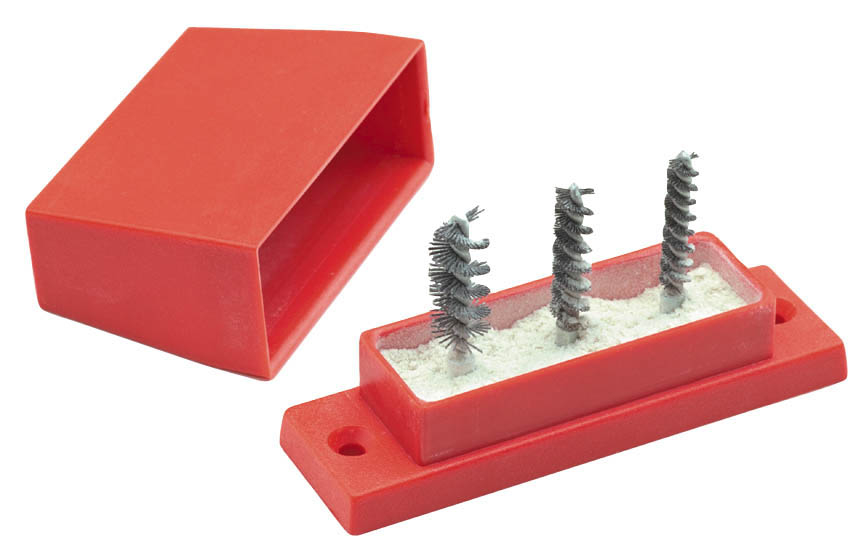
Upon opening the box, I was immediately struck by the simplicity of the design. It’s a no-frills, purpose-built tool constructed of a red, impact-resistant plastic. The three integrated brushes, designed for various calibers, and the included “motor mica” graphite powder gave me confidence it was ready to get to work.
Compared to simply using a cotton swab and manually applying graphite, which is messy and inconsistent, the Forster Case Neck Graphiter offered a more controlled and precise method. Other options like liquid neck lubes exist, but I wanted to avoid any risk of contamination with my powder. My initial impression was that this tool was a well-thought-out solution to a common reloading problem, and I was eager to put it to the test.
Real-World Testing: Putting Forster Case Neck Graphiter to the Test
First Use Experience
My initial testing took place at my reloading bench in my garage, where I have a dedicated space for ammunition preparation. I was prepping a batch of .308 Winchester cases for an upcoming long-range shooting competition. The garage environment, while generally controlled, can get dusty, so I appreciated the included cover for the Forster Case Neck Graphiter.
Using the tool was straightforward: a quick dip of the case neck into the graphite powder and then a few twists on the appropriate brush. The process felt smooth and consistent. I immediately noticed a significant reduction in the force required to pull the expander button through the case neck during resizing.
There were no immediate issues, although I did find that I needed to be careful not to over-apply the graphite, as too much could create a buildup in the case neck. However, with a little practice, I quickly found the sweet spot.
Extended Use & Reliability
After several weeks of using the Forster Case Neck Graphiter for various calibers (.223 Remington, 6.5 Creedmoor, and .308 Winchester), I’ve been consistently impressed with its performance. The brushes have held up well, showing no signs of excessive wear or fraying. The plastic construction remains sturdy.
Maintenance is simple: occasionally wiping down the brushes and the interior of the container to remove any excess graphite buildup. I haven’t had to refill the graphite yet, suggesting the included supply is indeed generous.
The Forster Case Neck Graphiter has definitely improved the consistency of my reloading process compared to my previous methods. Seating depths are now more uniform, and my group sizes at the range have noticeably tightened. I now consider it an essential tool in my reloading workflow.
Breaking Down the Features of Forster Case Neck Graphiter
Specifications
- Manufacturer: Forster
- Material: Impact-resistant Plastic
- Caliber Compatibility: .22 to .35 caliber
- Includes: Three Brushes, White “Motor Mica” Graphite Powder, Dust Cover
- Quantity: One unit
These specifications are important because they determine the tool’s versatility and durability. The wide caliber compatibility ensures it can be used for a variety of reloading projects. The impact-resistant plastic construction promises longevity and reliability on the reloading bench.
Performance & Functionality
The Forster Case Neck Graphiter excels at its primary function: applying a consistent and even coating of graphite lubricant to the inside of case necks. This reduces friction during resizing and improves the consistency of neck tension, leading to more uniform bullet seating and, ultimately, better accuracy. The three different sized brushes make it easy to apply graphite to almost any caliber.
The main strength of this tool is its simplicity and effectiveness. It’s a straightforward, no-nonsense solution to a common reloading problem. One area for potential improvement might be a slightly more robust base for mounting to the bench, although the current design is adequate. It definitely meets my expectations.
Design & Ergonomics
The Forster Case Neck Graphiter’s design is functional and ergonomic. The plastic construction is lightweight but feels durable. The tool sits comfortably on the bench, and the brushes are easily accessible.
There’s virtually no learning curve involved; the process is intuitive and easy to master. The cover is a great addition, keeping the graphite clean and preventing it from spreading dust and debris around the reloading bench.
Durability & Maintenance
The Forster Case Neck Graphiter appears to be a tool that will last for years with proper care. The brushes are replaceable if they ever wear out, further extending the tool’s lifespan. The plastic is resistant to most solvents and cleaning agents, making maintenance a breeze.
Cleaning the brushes involves simply wiping them down with a clean cloth or brush. The inside of the container can be cleaned with a vacuum or a damp cloth to remove any accumulated graphite powder.
Accessories and Customization Options
The Forster Case Neck Graphiter comes with everything you need to get started: the base unit, three brushes, and a supply of graphite powder. There are no specific customization options available for the tool itself. However, the brushes are replaceable if needed.
The tool is designed to work seamlessly with any standard reloading press and associated dies. It doesn’t require any special adapters or modifications.
Pros and Cons of Forster Case Neck Graphiter
Pros
- Provides consistent and even lubrication of case necks.
- Reduces friction and improves neck tension uniformity.
- Simple, easy to use, and requires minimal setup.
- Includes a generous supply of graphite powder.
- Cover keeps graphite clean and prevents mess.
Cons
- The plastic base could be more robust for permanent mounting.
- Requires careful application to avoid over-lubrication.
Who Should Buy Forster Case Neck Graphiter?
The Forster Case Neck Graphiter is perfect for reloaders who are serious about improving the consistency and accuracy of their ammunition. It’s especially beneficial for those who reload high volumes or work with a variety of calibers. Competitive shooters and precision rifle enthusiasts will find this tool particularly valuable.
Those who are just starting out in reloading and only load small quantities of ammunition might find that manual lubrication methods are sufficient for their needs. However, even beginners can benefit from the consistency and ease of use that the Forster Case Neck Graphiter provides.
There aren’t really any must-have accessories for this tool, as it comes with everything you need. However, having a good set of case neck turning tools can further enhance the precision of your reloading process.
Conclusion on Forster Case Neck Graphiter
The Forster Case Neck Graphiter is a simple yet highly effective tool that can significantly improve the consistency and accuracy of your reloaded ammunition. It’s a well-designed, durable, and easy-to-use solution to a common reloading problem. At $35.99, the price is more than justified.
I wholeheartedly recommend the Forster Case Neck Graphiter to any reloader looking to take their ammunition preparation to the next level. It’s a small investment that can yield significant improvements in performance and consistency. So, ditch the messy swabs and inconsistent results, and give the Forster Case Neck Graphiter a try. You won’t be disappointed!