
First Impressions of DPM Compact Nut Wrench
The DPM Compact Nut Wrench enters a crowded market of AR-15 armorer’s tools, promising a lightweight and efficient solution for castle nut tightening. Manufactured by DPM, this wrench aims to simplify a crucial maintenance task. Its compact size and hardened steel construction suggest a focus on portability and durability, features highly valued by tactical gear specialists like myself.
My interest in the DPM Compact Nut Wrench stemmed from a need for a truly portable armorer’s tool. I often find myself assisting fellow shooters at the range, or performing quick fixes on AR-15 platforms in the field. A full-sized armorer’s wrench is often too bulky to include in my go-bag, so I was hoping this compact offering could bridge that gap.
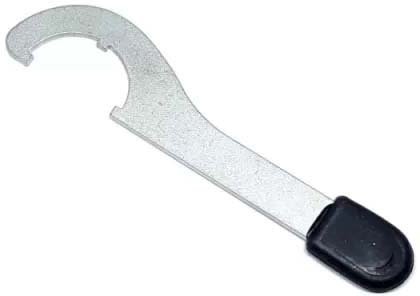
Upon receiving the DPM Compact Nut Wrench, I was immediately struck by its size. It is noticeably smaller than standard castle nut wrenches. The stainless steel finish and 3.2mm thickness gave it a reassuringly solid feel, hinting at robust construction.
Compared to my standard armorer’s wrench from Wheeler Engineering and a multi-tool-style wrench from Magpul, the DPM Compact Nut Wrench seemed promising in terms of portability. However, its lack of a torque wrench interface was immediately concerning. I ultimately chose the DPM Compact Nut Wrench hoping for a streamlined, lightweight solution, willing to potentially sacrifice some leverage for the sake of portability.
My initial reaction was mixed. The size was appealing, but the lack of torque wrench compatibility raised immediate doubts about its practicality for serious armorer work. Only real-world testing would reveal if this compact design could truly deliver.
Real-World Testing: Putting DPM Compact Nut Wrench to the Test
First Use Experience
I first tested the DPM Compact Nut Wrench at my local shooting range during a routine AR-15 maintenance session. The goal was to tighten the castle nut on my primary rifle after a few hundred rounds of use. The range environment offered a controlled setting to evaluate the tool’s ease of use and effectiveness.
Unfortunately, the first use was disappointing. While the wrench did engage the castle nut properly, its small size made it incredibly difficult to generate enough torque. I found myself struggling to achieve the required tightness without resorting to improvised leverage, such as using the handle of another tool as an extension.
The DPM Compact Nut Wrench was completely ineffective in the described scenario.
Extended Use & Reliability
After several weeks of occasional use on various AR-15 platforms, my initial impressions remained unchanged. The DPM Compact Nut Wrench proved to be consistently underpowered for tightening castle nuts to the proper torque specification. It simply lacks the leverage required for the task.
I observed no significant wear and tear on the wrench itself, thanks to the hardened steel construction. However, the tool’s limitations made it unsuitable for anything beyond very minor adjustments. Cleaning was straightforward, but the tool’s overall ineffectiveness overshadowed any potential benefits in maintenance.
Compared to my standard armorer’s wrench, the DPM Compact Nut Wrench was a significant disappointment. It failed to provide the necessary leverage and precision for proper castle nut tightening, making it a less reliable tool for serious armorer work. My standard wrench offered far better torque, proper interface with a torque wrench, and therefore, peace of mind.
Breaking Down the Features of DPM Compact Nut Wrench
Specifications
The DPM Compact Nut Wrench is constructed from hardened steel with a 3.2mm thickness, intended for durability. Its primary function is to tighten the castle nut on AR-15 and M16 rifles. The wrench is finished in a stainless color.
These specifications suggest a focus on portability and basic functionality. The hardened steel should resist bending or breaking under moderate stress, but the compact size limits the amount of torque that can be applied. The compatibility with AR-15 and M16 platforms makes it a potentially versatile tool.
Performance & Functionality
The DPM Compact Nut Wrench falls short of expectations in terms of performance. While it can engage the castle nut, its small size provides insufficient leverage to achieve proper torque. The wrench is not compatible with a torque wrench, making it impossible to tighten the nut to the manufacturer’s recommended specification.
The primary weakness of the DPM Compact Nut Wrench is its lack of leverage. This makes it difficult to achieve a secure and properly torqued castle nut, increasing the risk of the nut loosening during use. The absence of a torque wrench interface is a significant oversight for any serious armorer’s tool. It does not meet basic performance expectations of its core function.
Design & Ergonomics
The DPM Compact Nut Wrench features a simple, straightforward design. The hardened steel construction provides a solid feel, but the small size makes it uncomfortable to grip and apply force. The wrench is relatively easy to use in terms of engaging the castle nut.
However, the lack of ergonomic considerations makes it difficult to generate sufficient torque. The learning curve is minimal, but the tool’s inherent limitations overshadow any ease of use. It could use some ergonomic consideration to provide greater leverage for tightening.
Durability & Maintenance
The DPM Compact Nut Wrench appears to be durable due to its hardened steel construction. It should withstand regular use without significant wear and tear. The stainless steel finish resists corrosion and makes cleaning relatively simple.
The tool requires minimal maintenance beyond occasional cleaning. Its simple design reduces the likelihood of mechanical failure. The DPM Compact Nut Wrench is likely to last a long time, but its limited functionality reduces its overall value.
Accessories and Customization Options
The DPM Compact Nut Wrench does not come with any accessories. Nor does it offer any customization options. The wrench’s design is fixed, and there are no compatible attachments or modifications. The lack of customization limits its versatility and potential for improvement. The absence of accessories furthers the idea that it’s an extremely basic tool.
Pros and Cons of DPM Compact Nut Wrench
Pros
- Compact and lightweight for easy portability.
- Durable hardened steel construction.
- Simple and straightforward design.
- Affordable price point.
- Compatible with AR-15 and M16 platforms.
Cons
- Insufficient leverage for proper castle nut tightening.
- Not compatible with a torque wrench.
- Uncomfortable to grip and apply force.
Who Should Buy DPM Compact Nut Wrench?
The DPM Compact Nut Wrench might be suitable for users needing an extremely compact and lightweight tool for very minor adjustments in a pinch. It may also suit someone on a very tight budget, and who only anticipates the need for minor adjustment.
Anyone needing to properly torque a castle nut should skip this product. This includes serious armorers, competitive shooters, and anyone prioritizing rifle reliability.
A must-have modification to use this product would be some sort of leverage extension, such as a pipe or sturdy screwdriver handle. Even with added leverage it still may not be sufficient.
Conclusion on DPM Compact Nut Wrench
The DPM Compact Nut Wrench promises portability and affordability, but ultimately falls short in delivering the core functionality required of an armorer’s tool. Its small size limits leverage, making it difficult to properly tighten castle nuts. The lack of torque wrench compatibility is a significant drawback.
The price is undeniably attractive, but the compromised performance undermines its value. I cannot personally recommend the DPM Compact Nut Wrench for serious AR-15 maintenance.
Instead, I would advise investing in a full-sized armorer’s wrench that offers adequate leverage and torque wrench compatibility. While the DPM Compact Nut Wrench may appeal to those prioritizing portability above all else, its limitations make it an unreliable tool for critical tasks.