
First Impressions of Damascus Blue River Hunter
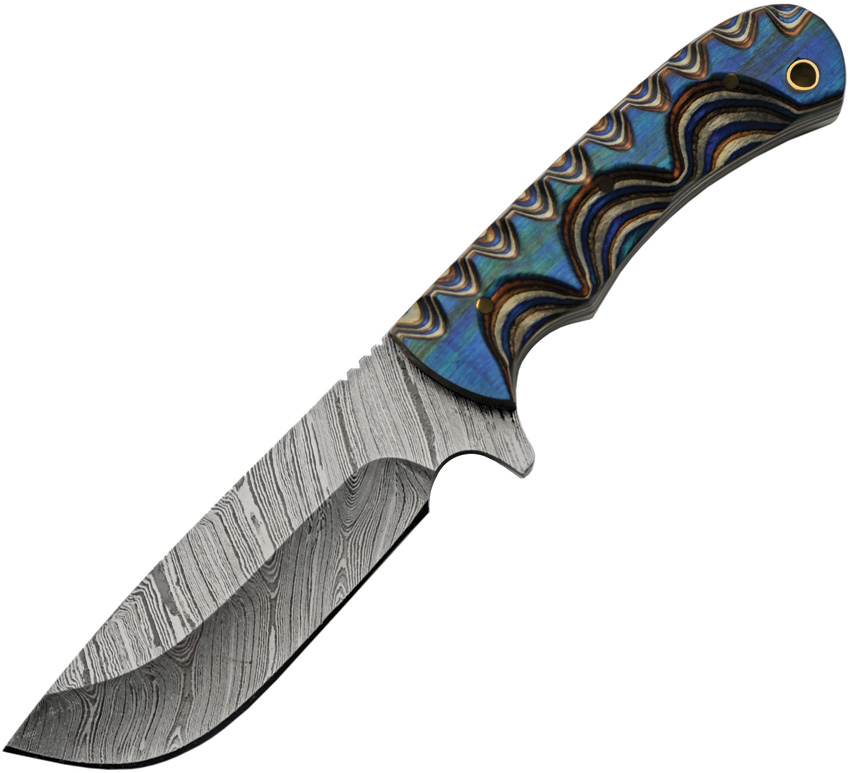
The Damascus Blue River Hunter from Damascus is a knife that immediately catches the eye with its striking blue pakkawood handle and the promise of a durable Damascus steel blade. At a price point of $53.49, it piqued my interest as a potential everyday carry (EDC) or backup hunting knife. I hoped it would balance aesthetics with functionality, a crucial factor I consider after years of field experience.
I was looking for a reliable, all-purpose knife that could handle basic camp chores and light game processing. The Damascus Blue River Hunter’s full tang construction suggested durability, a necessity for any knife I trust in the outdoors.
Unboxing the Damascus Blue River Hunter, I was initially impressed by the visual appeal. The blue finger-grooved pakkawood handle offered a comfortable grip, and the Damascus steel blade had a distinct pattern. The included brown leather sheath seemed functional, though the leather felt a bit thin. My first impression was a mix of intrigue and cautious optimism.
Compared to my trusty Ka-Bar USMC fighting knife (a workhorse but not pretty) and a Benchmade Bugout (lightweight, but a bit less robust), the Damascus Blue River Hunter seemed to position itself as a middle ground. It aims for a blend of aesthetics and practical performance. I chose this knife to test whether a budget-friendly Damascus steel blade could hold its own against more established brands.
My initial excitement was tempered by the price point; Damascus steel at this price raised questions about the quality and heat treatment. I was eager to put it through its paces and see if it lived up to the hype or fell short of expectations.
Real-World Testing: Putting Damascus Blue River Hunter to the Test
First Use Experience
I tested the Damascus Blue River Hunter during a weekend camping trip in the local state forest. The tasks included preparing food, whittling kindling for a fire, and practicing basic bushcraft skills. The knife performed reasonably well for food prep, slicing vegetables and opening packages with ease.
However, the blade’s edge rolled slightly after some light chopping on small branches. The pakkawood handle remained comfortable even in damp conditions, providing a secure grip. The sheath was adequate for carrying the knife on my belt, although the retention strap felt a bit flimsy.
Extended Use & Reliability
After several weeks of use, the Damascus Blue River Hunter has shown some signs of wear. The edge requires frequent sharpening, suggesting the steel isn’t holding its edge as well as higher-end Damascus blades. The brown leather sheath is starting to show scuff marks and stretching.
Cleaning is straightforward; I simply wipe down the blade after use and apply a light coat of oil. The handle remains in good condition, resisting moisture and dirt. While it is suitable for basic tasks, it doesn’t outperform my dedicated hunting or bushcraft knives.
Breaking Down the Features of Damascus Blue River Hunter
Specifications
- The Damascus Blue River Hunter has a 9-inch (22.86cm) overall length. This makes it a decent size for both EDC and field use.
- The blade length is 4.75 inches (12.07cm), crafted from Damascus steel. The blade size is long enough for most camp tasks, but not overly bulky for carrying.
- The handle is made from Blue Finger Grooved Pakkawood. This provides a unique look and a relatively comfortable grip.
- It features a Full Tang construction, enhancing its overall strength and durability. A full tang is essential for a knife that will be used for anything more than light duty tasks.
- The knife has a Lanyard Hole at the end of the handle. This allows for easy attachment of a paracord for added security.
- It includes a Brown Leather Belt Sheath for convenient carry. The sheath is relatively simple, but functional for belt carry.
- The stated weight is 1 lb, which may be an error. The knife is closer to 0.5 lbs, a comfortable weight for all-day carry.
- The Knife Application is listed as Hunting. This suggests the knife is designed for field dressing game and other hunting-related tasks.
These specifications matter because they influence the knife’s usability, durability, and overall performance. A full tang and Damascus steel blade are generally indicative of a robust knife, but the quality of the steel and heat treatment are critical factors. The handle material and sheath design impact comfort and ease of carry.
Performance & Functionality
The Damascus Blue River Hunter performs adequately for general cutting tasks. Its sharpness out of the box was acceptable, but the edge retention is not exceptional. After moderate use, the blade requires frequent honing to maintain a decent edge.
The knife’s strengths lie in its aesthetic appeal and comfortable handle. However, its weakness is the steel’s edge retention, which is below that of high-end Damascus blades. The Damascus Blue River Hunter meets basic expectations for a budget knife but doesn’t exceed them.
Design & Ergonomics
The build quality of the Damascus Blue River Hunter is adequate for its price range. The pakkawood handle is attractive and provides a secure grip, even when wet. The knife feels balanced in hand, which aids in controlled cutting.
The design is generally user-friendly, although the finger grooves on the handle might not suit all hand sizes. There’s no significant learning curve; it functions as expected for a fixed-blade knife.
Durability & Maintenance
The durability of the Damascus Blue River Hunter is a concern, given the blade’s tendency to lose its edge quickly. With proper care, including regular sharpening and cleaning, it should last for several years of moderate use. However, it’s not likely to withstand heavy-duty tasks or prolonged abuse.
Maintaining the knife is straightforward. Regular cleaning and oiling of the blade will help prevent rust, but the steel’s edge retention is a limitation.
Accessories and Customization Options
The Damascus Blue River Hunter comes with a basic brown leather belt sheath. There are no listed customization options from the manufacturer.
However, the lanyard hole allows for attaching paracord or other accessories. Aftermarket sheaths might provide a better fit and increased durability, but compatibility with other accessories is limited.
Pros and Cons of Damascus Blue River Hunter
Pros
- Aesthetically Pleasing: The blue pakkawood handle and Damascus blade pattern provide an attractive appearance.
- Comfortable Grip: The finger-grooved handle offers a secure and comfortable hold.
- Full Tang Construction: Enhances the knife’s strength and durability.
- Affordable Price: At $53.49, it’s an entry-level option for those interested in Damascus steel knives.
- Suitable for Light Tasks: Works well for basic cutting, food preparation, and light camp chores.
Cons
- Poor Edge Retention: The Damascus steel does not hold an edge well and requires frequent sharpening.
- Sheath Quality: The included leather sheath is flimsy and may not withstand long-term use.
Who Should Buy Damascus Blue River Hunter?
The Damascus Blue River Hunter is perfect for casual campers, hikers, or anyone looking for an aesthetically pleasing, budget-friendly knife for light tasks. It would be a good gift for someone starting to explore the outdoors and wants a visually appealing tool. It would also suit anyone wanting to experience the look of a Damascus steel blade, without spending a great deal of money.
Someone looking for a reliable, heavy-duty knife for serious bushcraft, hunting, or survival situations should skip this product. Professionals or experienced outdoorsmen needing a high-performance blade with excellent edge retention should consider investing in a more expensive, higher-quality knife.
A must-have accessory would be a quality sharpening stone or system to maintain the blade’s edge. Replacing the included sheath with a more durable Kydex or leather sheath would also be a worthwhile upgrade.
Conclusion on Damascus Blue River Hunter
The Damascus Blue River Hunter is a visually appealing, budget-friendly knife that’s suitable for light tasks and casual use. While it offers the aesthetic of Damascus steel and a comfortable handle, its poor edge retention and less-than-stellar sheath quality are significant drawbacks. At $53.49, the price is justified for its looks and basic functionality, but serious users should invest in a higher-quality blade.
I would recommend it to someone who values aesthetics over performance and is willing to maintain the blade’s edge frequently. For those seeking a truly reliable and durable knife for demanding outdoor activities, I suggest exploring other options with better steel and construction.
Ultimately, the Damascus Blue River Hunter is a decent entry-level knife for light use. Don’t expect it to perform like a $200+ knife. However, if you’re willing to accept its limitations, it could be a visually striking addition to your gear.