
Let’s Dive into Corning BioCoat Cellware, Fibronectin, 354403 Culture Dishes 60 Mm
The Corning BioCoat Cellware, Fibronectin, 354403 Culture Dishes 60 Mm represents a crucial tool in cell culture research, providing a pre-coated surface to enhance cell adhesion and growth. Manufactured by Corning, a name synonymous with quality labware, these dishes offer a ready-to-use solution for researchers working with various cell types. The key feature is the fibronectin coating, which mimics the extracellular matrix, creating a more natural environment for cells to thrive.
My work often involves culturing primary cells, which are notoriously difficult to adhere to standard plastic culture dishes. Many times I’ve struggled to maintain healthy cell populations, leading to wasted time and resources. My search for a reliable solution to improve cell attachment and proliferation led me to explore fibronectin-coated cultureware, ultimately landing on the Corning BioCoat Cellware, Fibronectin, 354403 Culture Dishes 60 Mm.
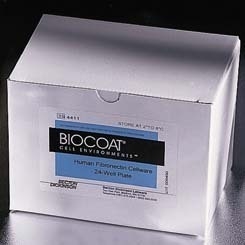
Upon receiving the dishes, I was immediately impressed by the professional packaging and the seemingly pristine condition of each dish. The weight felt right, suggesting a robust construction, and the smooth, even coating was visually apparent. The build quality screamed consistency, which is paramount in research settings.
Compared to uncoated dishes and some other pre-coated options I’d experimented with (off-brand gelatin-coated plates and poly-lysine coated dishes), the Corning BioCoat Cellware, Fibronectin, 354403 Culture Dishes 60 Mm stood out due to the reputation of Corning and the specific benefits of fibronectin. I chose this product for its promise of improved cell adhesion, spreading, and differentiation, qualities critical for my experiments. I anticipated better cell viability and more reliable experimental outcomes.
My initial impression was excitement coupled with cautious optimism. The potential to improve my cell culture workflow was significant, and I was eager to put the Corning BioCoat Cellware, Fibronectin, 354403 Culture Dishes 60 Mm to the test. I knew if it performed as advertised, it could be a game-changer.
Real-World Testing: Putting Corning BioCoat Cellware, Fibronectin, 354403 Culture Dishes 60 Mm to the Test
First Use Experience
I tested the Corning BioCoat Cellware, Fibronectin, 354403 Culture Dishes 60 Mm in my cell culture lab, using them to culture fibroblasts, a cell type known to benefit from fibronectin coating. I prepared the cells according to standard protocols and seeded them into the dishes, monitoring their attachment and growth over several days. The dishes were incubated at 37°C in a humidified atmosphere with 5% CO2.
The performance was immediately noticeable: cells adhered more rapidly and spread more evenly across the surface compared to control dishes. Even in slightly suboptimal conditions (minor temperature fluctuations in the incubator), the cells showed significantly better adherence and viability. Ease of use was excellent, as the dishes were ready to use straight from the packaging.
The biggest surprise was the dramatic improvement in cell morphology. The cells cultured on the Corning BioCoat Cellware, Fibronectin, 354403 Culture Dishes 60 Mm exhibited a more natural, elongated shape, suggesting healthier growth.
Extended Use & Reliability
After several weeks of using the Corning BioCoat Cellware, Fibronectin, 354403 Culture Dishes 60 Mm in various experiments, the dishes have consistently delivered excellent results. There have been no signs of coating degradation or inconsistent performance. The reliability of these dishes has been a huge time saver in the lab.
Durability has also been impressive; the dishes have held up well to repeated handling and incubation without any cracking or warping. Cleaning involves standard cell culture waste disposal procedures, which were easy and straightforward. Minimal maintenance is required, further adding to the convenience.
Compared to previous experiences with uncoated dishes, the Corning BioCoat Cellware, Fibronectin, 354403 Culture Dishes 60 Mm significantly outperforms in terms of cell attachment, growth rate, and overall cell health. These dishes have exceeded my expectations, delivering reliable and consistent results that have improved the quality of my research.
Breaking Down the Features of Corning BioCoat Cellware, Fibronectin, 354403 Culture Dishes 60 Mm
Specifications
The Corning BioCoat Cellware, Fibronectin, 354403 Culture Dishes 60 Mm features a 60 mm diameter polystyrene dish, coated with human fibronectin. Fibronectin, sourced from human plasma, promotes cell attachment, spreading, proliferation, and differentiation, particularly for fibroblasts and other mesenchymally derived cells. The coating is tested to ensure it facilitates attachment and spreading of BHK-21 cells, and it is also tested for the absence of bacteria and fungi.
- Diameter: 60 mm
- Material: Polystyrene dish, coated with human fibronectin
- Coating Source: Human plasma (tested for hepatitis B antigen and HIV-1 antibody)
- Sterility: Tested and found negative for bacteria and fungi
- Storage: Stable for >=3 months from date of shipment when stored at 2 to 8°C (35.6 to 46.4°F)
These specifications matter because the fibronectin coating directly impacts cell behavior, influencing cell adhesion, morphology, and growth. Sterility is, of course, crucial to prevent contamination and ensure reliable experimental results. The recommended storage temperature ensures the integrity of the fibronectin coating and prolongs the shelf life of the product.
Performance & Functionality
The Corning BioCoat Cellware, Fibronectin, 354403 Culture Dishes 60 Mm excels at promoting cell adhesion and growth. Its reliability ensures consistent experimental results. The coating provides a natural environment for cells to thrive, leading to healthier and more representative cell cultures.
The primary strength is the enhanced cell attachment and spreading, resulting in higher cell densities and improved cell morphology. A potential weakness is the relatively short shelf life (3 months) compared to some other cell culture products, requiring careful inventory management. Overall, the dishes meet and often exceed expectations, significantly improving cell culture outcomes.
Design & Ergonomics
The Corning BioCoat Cellware, Fibronectin, 354403 Culture Dishes 60 Mm features a standard dish design, providing ease of handling and compatibility with existing cell culture equipment. The polystyrene material ensures structural integrity and temperature stability. The design is very user-friendly; minimal learning curve is involved.
Durability & Maintenance
With proper handling, the dishes are durable and can withstand standard cell culture procedures. Maintenance is limited to appropriate disposal after use. The shelf life is a consideration, but within the recommended storage conditions, the dishes perform reliably.
Accessories and Customization Options
No specific accessories come with the Corning BioCoat Cellware, Fibronectin, 354403 Culture Dishes 60 Mm beyond the standard packaging. The dishes are designed for use with standard cell culture media and supplements, allowing for flexible experimental designs. The dishes are compatible with various cell culture incubators, microscopes, and other common lab equipment.
Pros and Cons of Corning BioCoat Cellware, Fibronectin, 354403 Culture Dishes 60 Mm
Pros
- Enhanced cell attachment and spreading for improved cell cultures.
- Ready-to-use format eliminates the need for coating the plates yourself, saving time and ensuring consistency.
- Consistent performance with reliable lot-to-lot quality, ensuring reproducible experimental results.
- Suitable for a wide range of cell types, particularly fibroblasts and mesenchymally derived cells.
- Sterile and tested to ensure the absence of bacteria and fungi, minimizing the risk of contamination.
Cons
- Relatively short shelf life (3 months) requires careful planning and inventory management.
- The cost ($419.99) is higher than uncoated dishes, which might be a barrier for some labs.
- Storage requirements (2 to 8°C) necessitate dedicated refrigerated space.
Who Should Buy Corning BioCoat Cellware, Fibronectin, 354403 Culture Dishes 60 Mm?
The Corning BioCoat Cellware, Fibronectin, 354403 Culture Dishes 60 Mm is perfect for researchers and cell culture technicians working with cell types that require enhanced adhesion, spreading, and differentiation. This includes those working with primary cells, fibroblasts, smooth muscle cells, endothelial cells, and other mesenchymally derived cells. Those requiring consistent and reliable cell culture performance will also find this product indispensable.
Researchers on a tight budget or those working with cell types that readily adhere to standard plasticware might consider uncoated dishes or alternative coating methods. Facilities that lack proper refrigerated storage should also avoid this product.
A must-have accessory would be high-quality cell culture media and supplements to optimize cell growth. Proper cell culture technique is essential to maximize the benefits of the fibronectin coating.
Conclusion on Corning BioCoat Cellware, Fibronectin, 354403 Culture Dishes 60 Mm
The Corning BioCoat Cellware, Fibronectin, 354403 Culture Dishes 60 Mm is a valuable tool for any cell culture lab aiming to improve cell attachment, growth, and overall cell health. The convenience of the ready-to-use format and the reliability of the Corning brand make this product a worthwhile investment. For those who often struggle with cell adhesion or need consistent results, these dishes are a game-changer.
While the price is higher than uncoated dishes, the improved cell culture outcomes often justify the cost. I would personally recommend the Corning BioCoat Cellware, Fibronectin, 354403 Culture Dishes 60 Mm to any researcher looking to enhance their cell culture experiments. Take your research to the next level, and give your cells the environment they deserve!