
First Impressions of Coghlans Wrist Compass
Navigating the wilderness, whether on a hunting expedition or a simple day hike, requires reliable tools. The Coghlans Wrist Compass, a miniature navigation aid promising hands-free convenience, caught my eye with its compact design and affordable price. I was intrigued to see if this seemingly simple device could hold its own against more sophisticated (and expensive) navigation options.
For years, I’ve relied on larger, more robust compasses, often paired with GPS devices, but a smaller, secondary option is beneficial. It is essential for scenarios where bulkier gear is impractical or as a backup in case of electronic failure. This led me to consider the Coghlans Wrist Compass, hoping to find a lightweight and dependable tool for quick bearings and situational awareness.
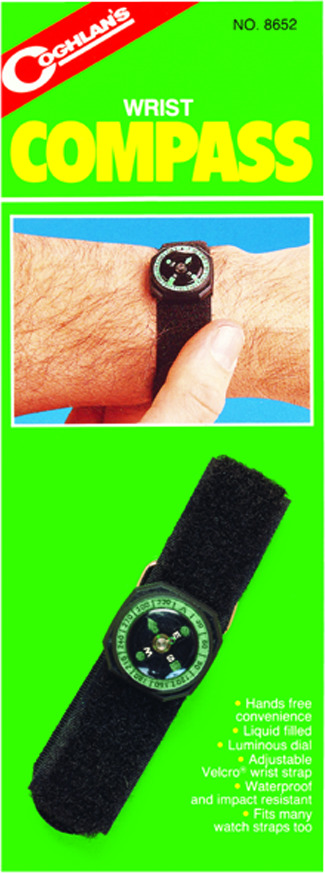
My first impression upon seeing the Coghlans Wrist Compass was one of slight skepticism mixed with curiosity. The diminutive size (7/8″ in diameter) was immediately apparent, making me wonder about its accuracy and readability. The simple, liquid-filled design seemed sturdy enough, and the adjustable Velcro strap looked like it would accommodate various wrist sizes. It felt incredibly lightweight.
Compared to my Suunto MC-2 or even a basic button compass from Brunton, the Coghlans Wrist Compass is noticeably smaller and simpler. It lacks the sighting features and detailed markings of the Suunto but is significantly more compact and less expensive than either. The appeal was its portability and ease of use, prioritizing convenience over advanced features. I picked the Coghlans Wrist Compass over similar button compasses due to its dedicated wrist strap and luminous dial, features often absent in the bare-bones models.
Initially, I was cautiously optimistic. While the build quality seemed adequate for the price, I reserved judgment until I could put it through its paces in the field. The concept of a hands-free compass was appealing. The reality would depend on its accuracy, durability, and overall practicality in demanding outdoor environments.
Real-World Testing: Putting Coghlans Wrist Compass to the Test
First Use Experience
I first tested the Coghlans Wrist Compass during a weekend backpacking trip in the Appalachian Mountains. The terrain was varied, ranging from dense forests to open ridgelines, offering ample opportunity to evaluate its performance in different conditions. I used it primarily to confirm my heading while following established trails and to take quick bearings when venturing off-trail for short distances.
The Coghlans Wrist Compass performed surprisingly well in dry conditions. The luminous dial made it easy to read, even in the dim light of the forest canopy, and the needle settled quickly, providing relatively accurate readings. However, I noted that the small size made it challenging to get precise bearings, and the lack of degree markings limited its utility for detailed navigation.
It took me a few minutes to get used to the wrist-mounted design, primarily because I’m accustomed to holding a compass in my hand for sighting. The Coghlans Wrist Compass required me to keep my arm relatively steady and parallel to the ground for accurate readings. This was slightly awkward at first, but I quickly adapted with practice.
After about an hour of use, I noticed that the compass bubble had grown slightly larger. While it didn’t significantly impact the accuracy, it raised concerns about its long-term waterproofness and potential for further expansion in colder temperatures.
Extended Use & Reliability
After several weeks of regular use on various outdoor adventures, the Coghlans Wrist Compass has held up reasonably well. It has accompanied me on several hiking trips, a hunting expedition, and a few days of fishing, experiencing a range of conditions. I’ve encountered no catastrophic failures.
There are subtle signs of wear and tear, primarily on the Velcro strap, which has begun to fray slightly. The compass housing itself has remained intact. The face has some minor scratches.
Maintaining the Coghlans Wrist Compass is simple. I just wipe it clean with a damp cloth after each use and ensure the Velcro strap is free of debris. I avoid exposing it to extreme temperatures or harsh chemicals.
Compared to my more expensive compasses, the Coghlans Wrist Compass is undoubtedly less accurate and feature-rich. Its compact size and hands-free design make it a convenient backup or a suitable option for casual outdoor activities where precise navigation isn’t critical.
Breaking Down the Features of Coghlans Wrist Compass
Specifications
The Coghlans Wrist Compass is a simple, liquid-filled compass designed for wrist-worn convenience. It features a luminous dial for low-light visibility and an adjustable Velcro strap for comfortable wear. The compass measures 7/8″ in diameter and weighs only 0.03 lbs (approximately 5 grams), making it exceptionally lightweight and unobtrusive. Coghlans claims it is waterproof and impact-resistant, but the provided specifications do not specify a precise depth rating. The provided product details also state it fits most leather watch straps.
These specifications directly influence the product’s intended use case. The small size and low weight make it ideal for activities where minimizing bulk and weight is essential. The luminous dial enhances usability in low-light conditions, while the liquid-filled design ensures a stable needle. The Velcro strap allows for easy attachment to the wrist or other gear. However, the lack of detailed markings and sighting features limits its accuracy for precise navigation.
Performance & Functionality
The Coghlans Wrist Compass performs its primary function – indicating direction – adequately. The needle settles quickly and points north with reasonable accuracy in most conditions. However, the small size of the dial and the absence of degree markings make it difficult to obtain precise bearings. This compass is best suited for general directional awareness rather than detailed navigation.
Its strengths lie in its simplicity, lightweight design, and ease of use. The luminous dial is a valuable feature in low-light conditions. The weakness is its limited accuracy and lack of advanced features.
The Coghlans Wrist Compass mostly meets expectations for a basic, inexpensive compass. Its convenience and portability make it a useful addition to an outdoor gear kit. It will not replace a dedicated navigation compass or GPS device for serious backcountry travel.
Design & Ergonomics
The build quality of the Coghlans Wrist Compass is acceptable for its price point. The materials used appear to be durable enough to withstand regular use, although I have observed some minor wear and tear on the Velcro strap. The overall design is simple and functional.
It’s incredibly lightweight and comfortable to wear on the wrist. There is minimal learning curve involved. The user only needs to understand basic compass operation.
Durability & Maintenance
The Coghlans Wrist Compass should last for several years with proper care. It is not designed for extreme abuse. I recommend keeping it protected from impacts and extreme temperatures.
Maintaining the Coghlans Wrist Compass is easy, involving only occasional cleaning with a damp cloth. Repairing it is generally not feasible. Its price point means replacement is more practical than repair.
Accessories and Customization Options
The Coghlans Wrist Compass comes with no additional accessories beyond the attached Velcro strap. There are no customization options available for this product. It is a simple, self-contained unit designed for basic directional indication.
It is not designed to be compatible with accessories from other brands, although the Velcro strap could potentially be attached to other gear or modified as needed.
Pros and Cons of Coghlans Wrist Compass
Pros
- Lightweight and compact: The Coghlans Wrist Compass adds minimal weight and bulk to your gear, making it ideal for minimalist backpacking or as a backup compass.
- Hands-free convenience: The wrist-worn design allows you to keep your hands free for other tasks, such as hiking, climbing, or using trekking poles.
- Luminous dial: The luminous dial provides visibility in low-light conditions, enhancing usability during early morning or evening hours.
- Affordable price: The Coghlans Wrist Compass is inexpensive, making it accessible to a wide range of outdoor enthusiasts.
- Easy to use: With its simple design and basic functionality, the Coghlans Wrist Compass requires minimal learning curve.
Cons
- Limited accuracy: The small size and lack of degree markings make it difficult to obtain precise bearings.
- Durability concerns: The Velcro strap is prone to wear and tear, and the compass housing may not withstand extreme impacts.
Who Should Buy Coghlans Wrist Compass?
The Coghlans Wrist Compass is perfect for casual hikers, campers, and anglers who need a basic directional indicator for general situational awareness. It is also a suitable backup compass for experienced backpackers and survivalists who want a lightweight and reliable option in case their primary navigation tools fail.
This product is not recommended for users who require precise navigation, such as surveyors, orienteering competitors, or backcountry travelers venturing into remote and challenging terrain. These individuals would benefit from a more sophisticated compass with advanced features.
There are no must-have accessories or modifications for the Coghlans Wrist Compass. It is designed to be used as is.
Conclusion on Coghlans Wrist Compass
The Coghlans Wrist Compass offers a compelling blend of affordability, convenience, and basic functionality. While it lacks the precision and durability of higher-end compasses, its lightweight design and hands-free operation make it a useful addition to any outdoor gear kit. It is ideal as a backup or for those who need a simple directional indicator for casual outdoor activities.
The price of around $5 is certainly justified. It provides a functional compass at a fraction of the cost of more advanced models.
I would personally recommend the Coghlans Wrist Compass to anyone looking for a basic, inexpensive, and hands-free compass for general outdoor use. Don’t expect it to replace a dedicated navigation compass, but it’s perfect as a backup or for casual adventures. Pick one up today and add a layer of redundancy to your outdoor preparedness!