
Let’s Dive into China Made WWII M3 Trench Knife
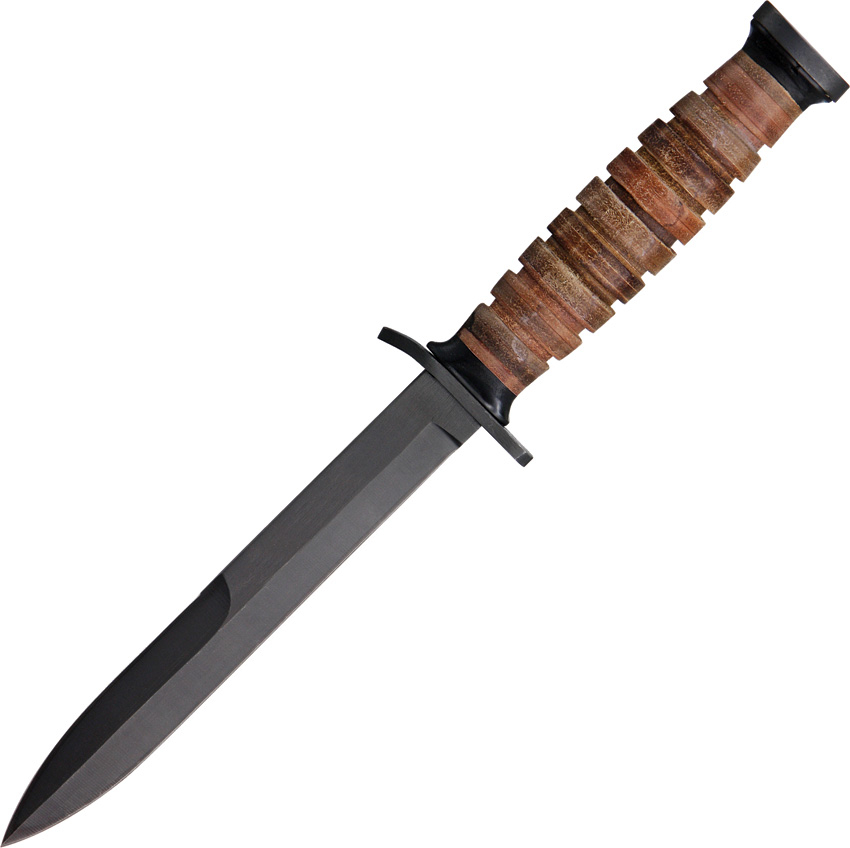
The China Made WWII M3 Trench Knife is a reproduction of a historical weapon, aiming to capture the essence of a trench knife used in close-quarters combat during World War II. Marketed as a durable cutting tool, it promises a blend of historical aesthetics and functional design. My interest in historical weaponry and tactical gear led me to acquire this knife, hoping to examine its construction and assess its potential utility.
Upon unboxing, the China Made WWII M3 Trench Knife felt surprisingly light, a stark contrast to the original M3’s robust reputation. The initial impression was mixed; the overall design resembled the WWII M3, but the materials seemed less substantial. It reminded me of a cheaper movie prop rather than a battle-ready tool.
Compared to other fixed-blade knives I own, like my Ka-Bar USMC fighting knife or my Benchmade bushcraft knife, the China Made WWII M3 Trench Knife fell short in terms of perceived quality. I picked it primarily for its historical replica appeal and to test its capabilities as a budget-friendly option. I was hoping for a decent, usable knife, but I was also prepared for potential disappointments given the price point of $39.99.
Real-World Testing: Putting China Made WWII M3 Trench Knife to the Test
First Use Experience
I tested the China Made WWII M3 Trench Knife during a weekend camping trip focused on basic survival skills. The knife was primarily used for tasks such as preparing kindling, cutting rope, and food preparation. While the blade managed to perform these tasks, it lacked the sharpness and edge retention of my other knives.
The handle, made of stacked leather, provided a decent grip, but it felt a bit slippery when wet. One immediate issue was the scabbard; it felt flimsy and the knife rattled inside. After attempting to baton some small pieces of wood, the blade showed signs of rolling along the edge.
Extended Use & Reliability
After several more camping trips and occasional use around the workshop, the China Made WWII M3 Trench Knife began to show significant wear and tear. The blade’s black finish started to chip, exposing the underlying steel, and the edge required frequent sharpening. The leather handle seemed to absorb moisture easily, requiring regular oiling to prevent cracking.
The scabbard’s retaining strap eventually broke, rendering it almost useless. Compared to my experience with other knives made with higher-quality steel and materials, the China Made WWII M3 Trench Knife proved to be a significant disappointment in terms of durability and long-term reliability. The constant need for maintenance and the rapid degradation of components highlighted its limitations.
Breaking Down the Features of China Made WWII M3 Trench Knife
Specifications
The China Made WWII M3 Trench Knife features a 6.63-inch blade, with an overall length of 11.88 inches. The blade material is listed as Steel, finished with a Black coating. The handle is crafted from Leather, and it comes with a Scabbard. These specifications suggest a reasonably sized knife suitable for various tasks, but the vague “Steel” designation raises concerns about the specific type and quality of the blade material.
The absence of serrations indicates a focus on slicing and piercing rather than sawing. The Fixed Blade design is a common feature in tactical knives, ensuring greater strength and reliability compared to folding knives. The presence of a scabbard is essential for safe carry and storage.
Performance & Functionality
The performance of the China Made WWII M3 Trench Knife is adequate for light tasks, but it falls short under more demanding conditions. The edge dulls quickly, requiring frequent sharpening to maintain even a basic level of cutting efficiency. The knife’s balance is decent, but the lightweight construction makes it less effective for heavier tasks like chopping or batoning.
The handle provides a reasonable grip, but the leather material can become slippery, especially when wet or oily. The scabbard is the weakest point, offering minimal retention and exhibiting poor construction quality. The knife meets basic expectations for a budget-priced knife but does not excel in any particular area.
Design & Ergonomics
The design of the China Made WWII M3 Trench Knife is visually appealing, capturing the iconic look of the original WWII M3. The stacked leather handle provides a classic aesthetic, but the overall build quality is noticeably lower than the original. The knife feels relatively lightweight, which may be advantageous for some users, but detracts from its overall robustness.
The ergonomics are acceptable, but the handle could benefit from a more textured surface to enhance grip security. The scabbard’s design is basic, lacking any advanced features or retention mechanisms. The learning curve is minimal, as the knife operates on a straightforward fixed-blade principle.
Durability & Maintenance
The durability of the China Made WWII M3 Trench Knife is questionable, as the materials used are not of the highest quality. The blade’s steel is prone to chipping and dulling, and the black finish wears off easily. The leather handle requires frequent maintenance to prevent cracking and drying.
The scabbard is particularly vulnerable to damage, with the retaining strap being a common point of failure. Maintenance involves regular cleaning, sharpening, and oiling, which can be time-consuming. The long-term durability is significantly lower compared to knives made with higher-grade materials.
Accessories and Customization Options
The China Made WWII M3 Trench Knife comes with a basic scabbard, which is its only included accessory. Customization options are limited due to the knife’s design and construction. While some users may attempt to replace the handle or modify the blade, the low cost and relatively low quality of the knife make extensive modifications impractical.
The knife is generally not compatible with aftermarket accessories designed for higher-end tactical knives. Due to the low price point, there are very few, if any, dedicated aftermarket accessories, making it difficult to improve the knife’s functionality through customization.
Pros and Cons of China Made WWII M3 Trench Knife
Pros
- Affordable price point makes it accessible for budget-conscious buyers.
- Faithful reproduction of the iconic WWII M3 Trench Knife design.
- Lightweight construction makes it easy to carry.
- Suitable for light tasks like preparing kindling or cutting rope.
- Classic leather handle provides a comfortable grip.
Cons
- Low-quality steel dulls quickly and is prone to chipping.
- Flimsy scabbard offers minimal retention and is prone to failure.
- Poor overall durability compared to higher-quality knives.
Who Should Buy China Made WWII M3 Trench Knife?
The China Made WWII M3 Trench Knife is perfect for:
- History enthusiasts looking for an inexpensive replica.
- Cosplayers needing a prop for historical reenactments.
- Budget-conscious individuals needing a basic utility knife for light tasks.
Who should skip this product?
- Serious outdoorsmen or survivalists needing a reliable tool.
- Those seeking a durable and high-performance tactical knife.
- Individuals who prioritize quality and longevity in their gear.
Must-have accessories or modifications?
- A higher-quality sharpening stone.
- Leather care products to maintain the handle.
- An aftermarket scabbard for improved retention and durability (although that may negate the low price appeal).
Conclusion on China Made WWII M3 Trench Knife
The China Made WWII M3 Trench Knife offers an affordable entry point into the world of historical replica knives. While it captures the aesthetic appeal of the original WWII M3, its low-quality materials and questionable durability make it unsuitable for demanding tasks. The price point of $39.99 is justified for a basic replica, but buyers should be aware of its limitations.
I would not personally recommend this knife for serious use, but it may serve as a decent prop or display piece for history buffs. If you’re looking for a reliable tool for the outdoors or tactical applications, invest in a higher-quality knife with better materials and construction. Consider this purchase carefully, weighing the allure of its historical design against its practical limitations.