
First Thoughts on the Backpack 3003/Navy
The Backpack 3003/Navy immediately caught my attention with its unique claim of integrated body armor deployment. It’s not every day you see a backpack designed to offer both storage and immediate ballistic protection. This promises a blend of practicality and personal safety. As someone with extensive experience in tactical gear, I was eager to see if this backpack could live up to its innovative concept.
My interest in the Backpack 3003/Navy stemmed from a growing need for discreet personal protection during field operations. I often find myself in situations where a standard plate carrier is too conspicuous. I needed a solution that could offer a reasonable level of protection without drawing unnecessary attention.
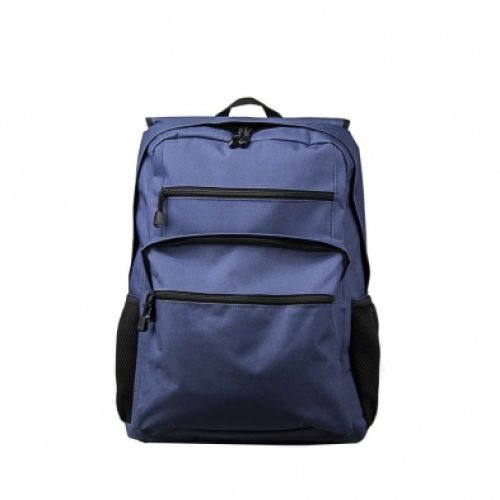
Upon unboxing, the Backpack 3003/Navy presents itself as a standard backpack, albeit with a slightly more rigid structure. The navy-colored fabric feels durable, although I’ll need to put it through rigorous testing to determine its actual resistance to abrasion and the elements. The red zippers provide a nice aesthetic contrast, making it look less tactical and more civilian-friendly.
Compared to other tactical backpacks on the market, such as the 5.11 Rush 12 or the Condor 3-Day Assault Pack, the Backpack 3003/Navy distinguishes itself through its integrated body armor capabilities. While the other backpacks focus on storage and organization, the Backpack 3003/Navy prioritizes personal safety. I chose this backpack hoping it could be a game-changer for discreet personal protection.
My initial reaction to the Backpack 3003/Navy was cautiously optimistic. The concept is intriguing, and the construction seems solid. I am eager to field-test its deployment mechanism and overall durability.
Real-World Testing: Putting Backpack 3003/Navy to the Test
First Use Experience
My first field test of the Backpack 3003/Navy involved a day at the shooting range and a short hike through varied terrain. I wanted to simulate real-world conditions where quick access to body armor could be crucial. The range provided a controlled environment to test the deployment, while the hike assessed comfort and mobility.
The Backpack 3003/Navy performed adequately in dry conditions. I found the shoulder straps comfortable enough for a few hours of wear. The deployment mechanism, however, required more practice than I anticipated.
Initially, I struggled with the speed and smoothness of deploying the front body armor carrier. This highlighted the importance of training with the backpack to build muscle memory.
Extended Use & Reliability
After several weeks of use, the Backpack 3003/Navy shows some signs of wear around the zipper areas, particularly the red zippers. The fabric itself seems durable enough to withstand everyday use. The stitching remains intact with no fraying.
Cleaning the Backpack 3003/Navy is relatively straightforward, requiring only a damp cloth and mild detergent. It’s important to note the navy color does a good job of concealing dirt and scuffs.
Compared to my experiences with other tactical backpacks, the Backpack 3003/Navy excels in its unique functionality. However, it falls slightly short in terms of overall organizational features and specialized compartments. The added weight from the internal armor compartment reduces the available storage space.
Breaking Down the Features of Backpack 3003/Navy
Specifications
The Backpack 3003/Navy is designed with two key integrated protective elements. It features a front body armor carrier deployable within seconds. A dedicated internal compartment houses a back torso body armor panel. The body armor panels are not included and must be sourced separately to match the desired protection level.
The backpack is constructed from a durable synthetic fabric in navy color. The zippers are contrasted in red for visibility and accent. The price of the Backpack 3003/Navy is $60.99.
These specifications are crucial for understanding the backpack’s intended use. The absence of included body armor means users must factor in additional costs and sourcing. The deployment time is key for its effectiveness.
Performance & Functionality
The primary function of the Backpack 3003/Navy is to provide discreet storage and rapid deployment of body armor. The speed of deploying the front carrier is paramount. With practice, I was able to deploy it in approximately 5-7 seconds, which is acceptable but could be improved.
The main strength of the Backpack 3003/Navy is its discreet nature and ability to offer protection without immediately revealing its purpose. The weakness is the limited storage space due to the internal armor compartment. It is also important to note that without proper body armor, this product offers only basic protection.
The Backpack 3003/Navy meets expectations in terms of concealability and the potential for rapid protection. The actual level of protection depends entirely on the user-supplied body armor.
Design & Ergonomics
The Backpack 3003/Navy is designed to look like a standard backpack, blending into urban environments. The navy color and red zippers help to avoid looking overly tactical. The weight is manageable, even with body armor installed, but it’s noticeably heavier than a standard backpack.
There is a slight learning curve involved in mastering the armor deployment mechanism. Regular practice is essential to ensure smooth and quick deployment in critical situations.
Durability & Maintenance
The synthetic fabric of the Backpack 3003/Navy appears to be reasonably durable. Extended use will reveal its true resilience. The stitching seems robust, and the zippers, while a potential weak point, are functional so far.
Maintenance is simple, requiring only periodic cleaning with a damp cloth. Regular inspection of the stitching and zippers is recommended to ensure longevity.
Accessories and Customization Options
The Backpack 3003/Navy does not come with any included accessories beyond its integrated armor compartments. Customization is primarily limited to the selection and installation of appropriate body armor panels.
Compatibility with other brands’ accessories is minimal, given the backpack’s specialized design. Users might be able to attach MOLLE-compatible pouches to the exterior for additional storage.
Pros and Cons of Backpack 3003/Navy
Pros
- Discreet protection: Allows for concealed carry of body armor without drawing attention.
- Rapid deployment: The front body armor carrier can be deployed in seconds.
- Dual protection: Provides compartments for both front and back torso protection.
- Affordable price: The Backpack 3003/Navy is relatively inexpensive.
- Civilian-friendly appearance: Looks like a normal backpack, reducing suspicion.
Cons
- Limited storage space due to body armor compartments.
- Body armor panels are not included.
- Deployment mechanism requires practice to master.
Who Should Buy Backpack 3003/Navy?
The Backpack 3003/Navy is perfect for individuals seeking a discreet way to carry and deploy body armor in potentially dangerous situations. This includes security personnel, journalists working in conflict zones, or concerned citizens living in high-risk areas. The Backpack 3003/Navy can provide a sense of security.
This product is not ideal for those needing maximum storage capacity or those unwilling to invest in separate body armor panels. It is also not suitable for individuals seeking a highly tactical or overtly militaristic backpack.
Must-have modifications include purchasing high-quality, appropriately sized body armor panels for both the front and back compartments. Practice deploying the system regularly.
Conclusion on Backpack 3003/Navy
The Backpack 3003/Navy presents a unique and compelling value proposition. It offers a discreet method for carrying and rapidly deploying body armor. Its civilian-friendly design and affordable price make it an accessible option.
The $60.99 price point is justified, considering the backpack’s unique functionality. The cost of body armor is not included, and is a separate consideration.
I would recommend the Backpack 3003/Navy to individuals seeking a discreet and affordable personal protection solution. It fills a niche in the tactical gear market by prioritizing concealability and rapid deployment. Invest in quality armor. Practice deployment. Stay safe.