
First Thoughts on the Loadbooks .300 Winchester Magnum
The Loadbooks .300 Winchester Magnum is a straightforward reloading manual. It promises to be a compilation of load data for the popular .300 Winchester Magnum cartridge. My years in the outdoors and tactical world have often led me to reload my own ammunition, both for cost savings and performance customization.
My journey to acquire the Loadbooks .300 Winchester Magnum stemmed from a specific need. I was seeking a consolidated, readily available source of reloading data for this caliber. The .300 Win Mag is a versatile round, capable of taking down large game at extended ranges, making it a favorite among hunters and long-range shooters alike. I had previously relied on manufacturer-specific data and online forums, which, while helpful, often proved to be fragmented and sometimes unreliable. This book promised a singular, compiled resource that I hoped would streamline my reloading process.
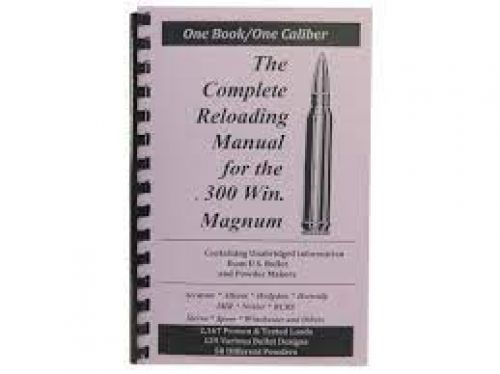
Upon receiving the Loadbooks .300 Winchester Magnum, my initial impression was one of practicality over aesthetics. The book is compact and lightweight, designed for function rather than display. The pages are basic, but the print is clear and legible. Compared to some of the more elaborate reloading manuals on the market, it lacks glossy pages and fancy graphics. I opted for this over more comprehensive, but also more expensive, manuals from Lyman or Hornady primarily due to the price point and focused approach. I also considered online subscription databases, but preferred having a physical book readily available in my reloading room, even without internet access.
My first impression was cautiously optimistic. I wasn’t expecting a work of art, but rather a reliable tool. If the data is accurate and comprehensive, the Loadbooks .300 Winchester Magnum would prove to be a valuable addition to my reloading library.
Real-World Testing: Putting Loadbooks .300 Winchester Magnum to the Test
First Use Experience
My first encounter with the Loadbooks .300 Winchester Magnum was in my reloading room, prepping for an upcoming elk hunt. I specifically used the book to find a starting load for a new batch of 180-grain Barnes TTSX bullets. The conditions were controlled, inside my well-lit and organized workspace.
The ease of use was immediately apparent. The book is organized logically, with clear headings and data tables. I quickly located several suitable loads for my components. I experienced a small issue finding specific powder burn rates, but that was quickly resolved with a quick internet search.
Extended Use & Reliability
After several months of using the Loadbooks .300 Winchester Magnum, I’ve found it to be a consistently useful reference. The durability has held up, despite being handled frequently in my reloading room. There are no signs of wear and tear beyond some minor smudges on the cover.
Maintenance is non-existent; it’s a book. Compared to relying solely on manufacturer data, this book has provided a broader range of load options. This has allowed me to fine-tune my .300 Win Mag loads for different rifles and shooting scenarios.
Breaking Down the Features of Loadbooks .300 Winchester Magnum
Specifications
- Caliber: .300 Winchester Magnum. The book focuses exclusively on load data for this popular magnum cartridge, ensuring a comprehensive resource for reloaders.
- Price: $8.99. This budget-friendly price makes it accessible to both novice and experienced reloaders.
- Format: Paperback. It allows for ease of use and storage in any reloading workspace.
- Content: Compilation of load data from various sources. It provides a consolidated reference, eliminating the need to search multiple manuals.
- Organization: Load data organized by bullet weight and powder type. This facilitates quick and efficient load selection.
These specifications matter because they define the scope and utility of the book. The single-caliber focus allows for a deeper dive into available loads, while the affordable price makes it a low-risk investment for reloaders. The paperback format is practical for the reloading bench, and the clear organization ensures efficient data retrieval.
Performance & Functionality
The Loadbooks .300 Winchester Magnum performs its primary function admirably: providing a consolidated source of reloading data. It is a handy tool for finding starting loads and comparing different powder and bullet combinations. However, it is important to note that it is a compilation, not an original research document.
The strengths lie in its accessibility and affordability. The weakness is that it doesn’t provide in-depth ballistic information or detailed explanations of reloading principles. It meets expectations as a basic reference guide, but doesn’t exceed them.
Design & Ergonomics
The design is simple and functional. The build quality is adequate for its intended purpose. The weight is negligible, and it sits comfortably on the reloading bench.
The layout is user-friendly, although some may find the lack of visual aids (charts, graphs) a drawback. There is virtually no learning curve.
Durability & Maintenance
Given that it’s a paperback book, longevity depends on careful handling. However, the binding seems secure, and the pages are reasonably thick. Maintenance involves keeping it clean and dry.
There are no parts to repair. I expect it to last several years with proper care.
Accessories and Customization Options
The Loadbooks .300 Winchester Magnum doesn’t come with any accessories, nor does it offer customization options in the traditional sense. However, its value lies in its compatibility with various reloading components from different brands. It provides load data for a wide range of bullets, powders, and primers, allowing reloaders to customize their ammunition to suit their specific needs. The book itself is an accessory to your reloading press and dies.
Pros and Cons of Loadbooks .300 Winchester Magnum
Pros
- Affordable Price. The Loadbooks .300 Winchester Magnum is very inexpensive compared to other reloading manuals.
- Consolidated Data. It compiles data from multiple sources into a single, convenient reference.
- Easy to Use. The organization is straightforward and easy to navigate.
- Caliber-Specific. Focuses exclusively on .300 Winchester Magnum, providing comprehensive data for that cartridge.
- Portable. Its compact size makes it easy to carry and store.
Cons
- Lack of Original Research. It’s a compilation, so it doesn’t offer original load development or ballistic analysis.
- Basic Presentation. The format is simple and lacks visual aids or detailed explanations.
Who Should Buy Loadbooks .300 Winchester Magnum?
The Loadbooks .300 Winchester Magnum is perfect for reloaders seeking an affordable and accessible source of data for this caliber. This includes hunters, long-range shooters, and those who simply enjoy handloading their own ammunition. It is also useful as a quick reference guide for experienced reloaders.
Those who should skip this product are reloaders looking for detailed ballistic information, in-depth reloading theory, or visually rich manuals. If you need detailed explanations and graphical representations, you should choose a different book.
A must-have accessory is a reliable reloading scale. Proper safety equipment is essential.
Conclusion on Loadbooks .300 Winchester Magnum
The Loadbooks .300 Winchester Magnum is a useful, if basic, reloading manual. Its value proposition lies in its affordability and consolidated data. The price is definitely justified for what it offers.
I would personally recommend it as a supplementary reference guide, especially for those on a budget. It is a handy tool to have on the reloading bench. Get your copy of the Loadbooks .300 Winchester Magnum and start loading your own custom .300 Win Mag rounds today!