
Let’s Dive into Whatman Grade GF/A Glass Microfiber Filters, Whatman 1820-024, Pack of 100
The Whatman Grade GF/A Glass Microfiber Filters, Whatman 1820-024, Pack of 100 are not the kind of gear you typically see strapped to a MOLLE vest or tucked into a bug-out bag. However, as an outdoor specialist, understanding water purification and environmental testing is paramount, and these filters play a vital role. Manufactured by Whatman, a name synonymous with laboratory precision, these filters promise a specific level of filtration and consistency, essential for reliable results.
My journey with filtration began during a survival course where questionable water sources were the norm. The inability to accurately assess water safety beyond basic visual cues was frustrating, highlighting the need for controlled, reproducible testing methods. That experience prompted me to seek tools that allow for confident evaluation of samples collected in the field.
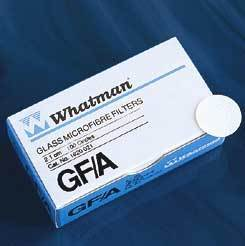
Upon receiving the package, the filters appeared as expected: neatly stacked, uniform circles. Their delicate nature was immediately apparent, requiring careful handling – a stark contrast to the ruggedness of typical tactical gear. Comparing them to generic coffee filters or even some basic syringe filters revealed a far more refined construction and a promise of consistent pore size.
My initial thought was one of cautious optimism. These weren’t going to be a magic bullet for every water contamination concern, but a necessary tool for controlled analysis. These filters offer a level of accuracy that is useful across a number of specific applications.
Real-World Testing: Putting Whatman Grade GF/A Glass Microfiber Filters, Whatman 1820-024, Pack of 100 to the Test
First Use Experience
I tested the Whatman Grade GF/A Glass Microfiber Filters in a multi-stage experiment focusing on water purification efficacy. This was conducted both at a controlled indoor lab and, subsequently, with samples from a local river known for varying levels of sediment and organic matter. The goal was to filter known quantities of water, analyze the pre- and post-filtration samples, and assess the filter’s ability to remove particulate matter.
In the field, conditions varied from sunny and dry to damp and breezy, impacting the ease of sample collection but not the filter’s performance. Using a vacuum filtration setup, I processed samples from the river with varying degrees of visible turbidity. The filters worked consistently, demonstrating a good flow rate even with heavily sedimented water, though pre-filtration with a coarse mesh was necessary to prevent clogging.
Using the filters was relatively straightforward, requiring a basic understanding of lab techniques but no specialized skills. The learning curve was minimal, primarily involving optimizing the vacuum pressure to achieve an efficient flow rate without damaging the delicate filter. One unexpected challenge was static cling, causing the filters to sometimes adhere to surfaces, but this was easily managed with careful handling.
Extended Use & Reliability
After several weeks of intermittent use across various projects, the Whatman Grade GF/A Glass Microfiber Filters have proven to be consistently reliable. They exhibit minimal degradation over time when stored properly, and their performance remains stable, provided they are not physically damaged. The uniformity of the filters across the pack has allowed for comparative testing to be conducted.
The filters, by their nature, are disposable and not designed for long-term durability; however, they consistently perform as expected within their intended lifespan. Maintenance primarily involves proper storage to prevent contamination and careful handling to avoid tearing or puncturing.
Compared to using less specialized filters, the Whatman filters offer a noticeable improvement in consistency and accuracy. With these filters, I’ve gained confidence in sample analysis that wouldn’t be possible with inferior products. They deliver the reliability that is critical for scientific applications.
Breaking Down the Features of Whatman Grade GF/A Glass Microfiber Filters, Whatman 1820-024, Pack of 100
Specifications
The Whatman Grade GF/A Glass Microfiber Filters, Whatman 1820-024, Pack of 100 boast several key specifications that influence their performance:
- Size: 2.4 cm diameter: This size is suitable for standard filtration setups and allows for efficient processing of smaller samples.
- Whatman No.: 1820-024: This number is critical for ordering replacements and ensuring you receive the correct grade of filter.
- Unit: Pack of 100: The pack size is ideal for labs or individuals performing frequent filtration.
- Porosity: Fine: This refers to the filter’s ability to capture fine particles, essential for applications requiring high purity.
- Flow Rate: Fast: A fast flow rate minimizes processing time, improving efficiency, especially with large sample volumes.
- Particle Retention: 1.6 µm: This is arguably the most critical specification, indicating the minimum particle size the filter can reliably retain.
These specifications are critical as they directly influence the applications for which the filters are suitable. A 1.6 µm particle retention allows for capturing microorganisms and fine sediments, making these filters useful in water quality testing. The fast flow rate ensures timely results, which is critical when dealing with perishable samples or time-sensitive analyses.
Performance & Functionality
The Whatman Grade GF/A Glass Microfiber Filters perform admirably in their intended role: removing particulate matter from liquids. They excel at clarifying samples, preparing them for further analysis, and achieving a consistently high level of purity. They are not designed to remove dissolved contaminants, but serve as an essential first step in many analytical processes.
Their strength lies in their consistency and reliability, providing reproducible results crucial for any scientific endeavor. However, they are delicate and can clog easily if used with highly turbid samples without pre-filtration.
The filters meet my expectations for a high-quality laboratory filter. These filters would exceed expectations for individuals with only rudimentary filtration needs.
Design & Ergonomics
The design of the Whatman Grade GF/A Glass Microfiber Filters is simple and functional: a circular disc of glass microfiber. The material is lightweight, but requires careful handling to avoid damage. Their thinness ensures a high flow rate, but contributes to their fragility.
They are inherently user-friendly, requiring no complex setup or special skills. However, familiarity with basic lab equipment, such as vacuum filtration apparatuses, is recommended for optimal use.
Durability & Maintenance
The Whatman Grade GF/A Glass Microfiber Filters are disposable and not intended for long-term use. Their lifespan depends entirely on the application and the cleanliness of the sample being filtered. Proper storage is crucial to prevent contamination and maintain their integrity.
Maintenance is minimal: simply store them in a dry, clean environment and handle them with care. Repairs are not possible, as any damage compromises their filtration capabilities.
Accessories and Customization Options
The Whatman Grade GF/A Glass Microfiber Filters do not come with specific accessories, as they are primarily used in conjunction with standard laboratory equipment. They are compatible with a wide range of filtration apparatuses, including vacuum filtration systems, syringe filters, and gravity filtration setups. They are inherently adaptable to existing equipment.
While there are no “customization” options in the traditional sense, users can select different filter sizes and porosities within the Whatman range to suit their specific needs. Choosing the correct filter grade for your application is paramount.
Pros and Cons of Whatman Grade GF/A Glass Microfiber Filters, Whatman 1820-024, Pack of 100
Pros
- Excellent Particle Retention: At 1.6 µm, these filters effectively remove fine particles, ensuring high sample purity.
- Fast Flow Rate: The high flow rate minimizes processing time, crucial for time-sensitive analyses.
- Consistent Performance: Whatman’s quality control ensures reliable, reproducible results.
- Versatile Compatibility: These filters integrate seamlessly with standard laboratory equipment.
- Convenient Pack Size: A pack of 100 is economical for frequent users.
Cons
- Fragile Material: The glass microfiber construction is delicate and prone to tearing or damage if not handled carefully.
- Prone to Clogging: High turbidity samples require pre-filtration to prevent clogging and maintain flow rate.
Who Should Buy Whatman Grade GF/A Glass Microfiber Filters, Whatman 1820-024, Pack of 100?
These filters are perfect for: environmental scientists conducting water quality assessments, laboratory technicians performing sample preparation, researchers requiring precise filtration for experiments, and home brewers seeking to clarify their beverages. Anyone needing precise, reliable particle removal will benefit.
Individuals who should skip this product include: those seeking a simple, reusable water filter for personal use (e.g., hiking), individuals needing to remove dissolved contaminants from water, and anyone unfamiliar with basic laboratory techniques. This is a specialized tool for specific applications.
A must-have accessory is a vacuum filtration apparatus to maximize the filter’s efficiency. Pre-filtration meshes are also advisable when working with turbid samples.
Conclusion on Whatman Grade GF/A Glass Microfiber Filters, Whatman 1820-024, Pack of 100
The Whatman Grade GF/A Glass Microfiber Filters, Whatman 1820-024, Pack of 100 are a reliable and consistent tool for anyone needing precise particle filtration. Their 1.6 µm particle retention and fast flow rate make them ideal for a range of laboratory and environmental applications. They are not a general-purpose filter, but rather a specialized instrument for specific tasks.
The price of $57.99 is justified given the quality, consistency, and performance offered by Whatman. For those requiring reproducible results and high sample purity, the investment is worthwhile.
I would recommend these filters to any professional or serious hobbyist involved in water quality testing, sample preparation, or other applications requiring precise filtration. Equip yourself with the right tool for the job, and experience the difference that quality filtration can make.