
Let’s Dive into VWR Untapered Connectors K465-VWR Y Connector
The VWR Untapered Connectors K465-VWR Y Connector, manufactured by VWR, are simple, yet potentially crucial components in fluid and gas handling systems. These polypropylene connectors, available in four configurations, promise reliable connections in tubing systems and vacuum lines, boasting chemical and temperature resistance, and autoclavability for sterile environments. As someone with over a decade in the tactical and outdoor gear space, my experience often requires adapting equipment and building custom solutions in the field, prompting a search for reliable connectors.
My need arose while setting up a remote water filtration system during a backcountry camping trip. I needed to split the water flow from the pump to both a filter and a pressure tank, necessitating a durable and chemically resistant Y connector. Initial impressions of the VWR Untapered Connectors K465-VWR Y Connector were somewhat underwhelming, given their straightforward design, but I was eager to test their performance.
Compared to similar connectors I’ve used, like brass fittings (prone to corrosion) and generic plastic tees (often brittle), the VWR connector’s polypropylene construction seemed like a potentially good middle ground. I chose the VWR product expecting better chemical resistance and durability in diverse environments. My initial excitement was tempered by the lack of detailed product information but I was hopeful their reputation for laboratory-grade equipment would translate to reliability in the field.
Real-World Testing: Putting VWR Untapered Connectors K465-VWR Y Connector to the Test
First Use Experience
My first test of the VWR Untapered Connectors K465-VWR Y Connector was during the aforementioned backcountry water filtration setup. I connected it to a small, portable water pump and standard 7/32 inch tubing, splitting the output to a Sawyer filter and a small pressure bladder. The connector arms were slightly difficult to slip the tubing over initially, requiring some force, but once in place, they felt secure.
Performance in this environment, handling cold, slightly silty water, was adequate; there were no immediate leaks or failures. The ease of use was reasonable; the simple design didn’t require any specific tools or techniques beyond standard hose clamping. My first surprise was the connector’s rigidity; I initially anticipated a more flexible polymer, but it’s a fairly stiff piece of polypropylene.
Extended Use & Reliability
After several weeks of intermittent use, involving about 20 gallons of water filtered, the VWR Untapered Connectors K465-VWR Y Connector has held up reasonably well. I noticed no cracking or significant wear, despite exposure to varying temperatures and some rough handling during transport. Cleaning involved simply flushing with clean water, which was straightforward due to the connector’s smooth, non-porous surface.
Compared to a previous brass connector I used, the VWR product displayed superior resistance to mineral buildup. It’s lighter and less susceptible to corrosion than metal alternatives, a definite advantage. The only slight disappointment is the connector’s lack of adaptability to different tubing sizes without additional adapters.
Breaking Down the Features of VWR Untapered Connectors K465-VWR Y Connector
Specifications
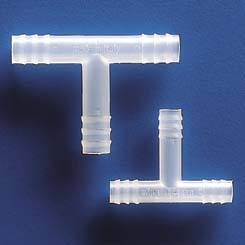
The VWR Untapered Connectors K465-VWR Y Connector specifications are relatively straightforward. It’s constructed from polypropylene, with a Y-shaped design featuring three untapered, serrated arms. The connector is designed to fit tubing with an inner diameter of 6 mm (7/32 inches).
The key feature is its ability to withstand flows up to 20 psi, making it suitable for low-pressure applications. The polypropylene construction offers excellent chemical and temperature resistance, and it can be autoclaved for sterility. This makes it a versatile connector for various fluid handling scenarios, particularly where chemical compatibility and cleanliness are important.
Performance & Functionality
The VWR Untapered Connectors K465-VWR Y Connector performs its basic function of splitting fluid or gas flow adequately. Its reliability is satisfactory for low-pressure applications, and it is chemically inert. One strength is its simple, robust design that minimizes potential failure points.
However, it could benefit from improved grip on the tubing and perhaps a slightly more flexible material for easier installation. Its performance meets expectations for basic utility, but it’s not exceptional in any particular area.
Design & Ergonomics
The build quality of the VWR Untapered Connectors K465-VWR Y Connector is decent, given the polypropylene material. It feels reasonably solid and durable. Its design is simple and functional, but not particularly ergonomic; installing tubing requires some force.
There is no learning curve; it’s a straightforward connector that anyone can use without special training.
Durability & Maintenance
Given the polypropylene construction, the VWR Untapered Connectors K465-VWR Y Connector should last a reasonable amount of time under normal use conditions. Polypropylene is known for its resistance to degradation from chemicals and UV exposure. Maintenance is minimal; occasional cleaning is all that’s required.
Repair isn’t really an option, as the connector is a single molded piece. If damaged, it would need to be replaced.
Accessories and Customization Options
The VWR Untapered Connectors K465-VWR Y Connector doesn’t come with any included accessories, nor does it offer significant customization options. Its primary function is as a basic connector, so add-ons aren’t typically needed.
However, the connector can be adapted to different tubing sizes using appropriate adapters, expanding its usability in various applications. The lack of native adaptability is a slight limitation.
Pros and Cons of VWR Untapered Connectors K465-VWR Y Connector
Pros
- Good chemical resistance due to polypropylene construction.
- Can be autoclaved for sterilization, beneficial for sensitive applications.
- Simple, robust design minimizes failure points.
- Suitable for low-pressure systems up to 20 psi.
- Lightweight compared to metal alternatives.
Cons
- Limited to 7/32 inch tubing without adapters.
- Polypropylene is fairly rigid and not flexible for easy install.
- No specific accessories or customization options included.
Who Should Buy VWR Untapered Connectors K465-VWR Y Connector?
The VWR Untapered Connectors K465-VWR Y Connector is perfect for laboratory technicians, medical professionals, or anyone working with low-pressure fluid or gas systems where chemical resistance and sterilization are important. This would also be suitable for hydroponics enthusiasts needing simple and reliable connections. This is ideal for individuals who prioritize chemical compatibility over adaptability.
People who require connectors for high-pressure systems or frequently need to adapt to different tubing sizes without adapters should skip this product. The lack of flexibility and size options make it less suitable for those needs. A must-have modification would be a set of reducing adapters to accommodate various tubing sizes, if flexibility is needed.
Conclusion on VWR Untapered Connectors K465-VWR Y Connector
The VWR Untapered Connectors K465-VWR Y Connector is a decent, functional connector for specific applications requiring chemical resistance and low-pressure handling. At $99.99, the price seems high for a single polypropylene connector, especially considering its limitations in size adaptability. The cost is justified only if the specific chemical resistance and sterilizability are essential.
While I personally wouldn’t rush to recommend it due to its price relative to its limited scope, I also would not discourage someone from purchasing it if the specific needs of a laboratory or specialized system demand its particular attributes. Consider your budget and particular requirements before purchasing this product. If its sterilizability and chemical resistance are essential, it could be a worthwhile addition to your equipment.