
First Impressions of Roper Knives Deadwood Skinner II
The Roper Knives Deadwood Skinner II immediately strikes you as a practical, no-nonsense tool designed for field use. Its compact 7.5″ overall length and classic skinner blade shape suggest a focus on functionality over flash. Roper Knives is not typically associated with high-end, boutique blades, but rather dependable working knives, and this offering seems to fall squarely within that reputation.
I’ve been searching for a smaller, more easily packable skinner for processing smaller game birds and rabbits on extended backcountry trips. My larger hunting knives are often overkill for this task, and their weight becomes noticeable after several days of carrying them. The Deadwood Skinner II seemed like a promising solution, offering a capable blade in a more manageable package.
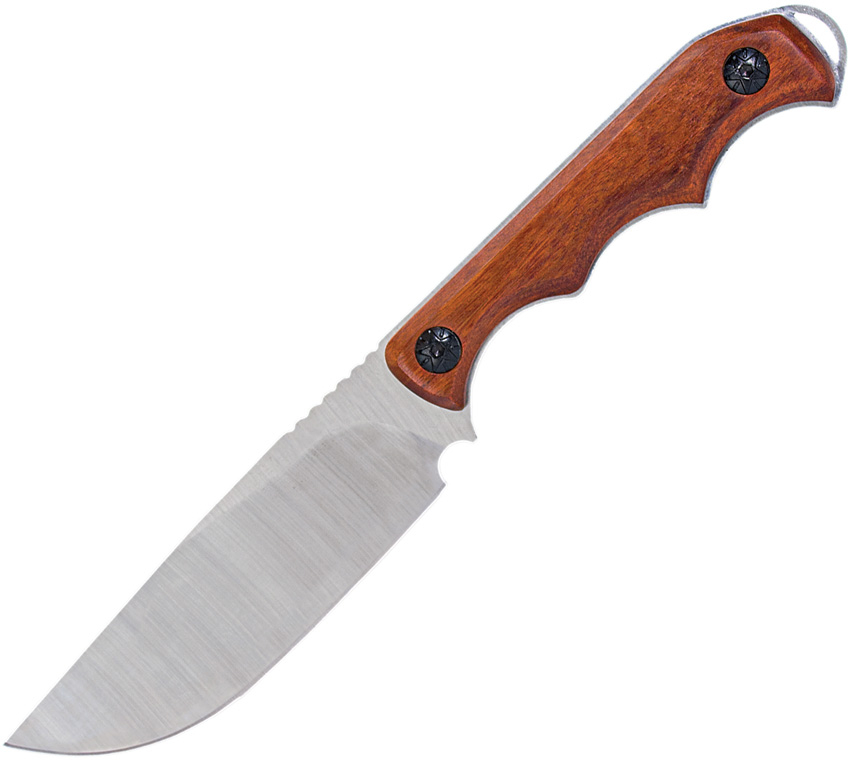
Out of the box, the Deadwood Skinner II feels solid, despite its light weight. The Guibourtie Erie hardwood handle has a pleasing warmth and texture, and the satin finish on the blade is clean and even. Compared to a Mora Companion or a Buck 110, the Deadwood Skinner II has a more traditional, almost antique aesthetic. I chose it over the Mora for its full-tang construction and more robust feel, and over the Buck 110 due to its lighter weight and fixed-blade convenience.
My first impression was cautiously optimistic. The knife felt good in hand, and the materials seemed appropriate for the price point. I was eager to put it to work and see how it performed in the field.
Real-World Testing: Putting Roper Knives Deadwood Skinner II to the Test
First Use Experience
My initial field test took place during a week-long backpacking trip in the Cascade Mountains. I used the Roper Knives Deadwood Skinner II primarily for processing small game (specifically, several grouse), as well as general camp chores like preparing kindling and food preparation. The knife performed admirably in dry conditions.
The blade was easy to control during skinning and cleaning the game, and the handle provided a secure grip even with slightly wet hands. No time was needed to get used to it. However, I did find that the blade lost its initial sharpness relatively quickly after processing multiple birds.
Extended Use & Reliability
After several months of consistent use, the Roper Knives Deadwood Skinner II has proven to be a capable, though not exceptional, performer. There are no significant signs of structural wear and tear, a testament to its full-tang construction. The hardwood handle has held up well, showing only minor scratches and scuffs from regular use.
The blade, however, requires frequent sharpening to maintain a keen edge. While the 8Cr13MoV stainless steel is easy to sharpen, its edge retention is noticeably less than that of higher-end steels. Cleaning is straightforward; a quick wash with soap and water followed by thorough drying is all that’s needed to prevent rust. Compared to my experiences with knives using D2 or S30V steel, the Deadwood Skinner II demands significantly more frequent maintenance to keep it performing at its best.
Breaking Down the Features of Roper Knives Deadwood Skinner II
Specifications
- The Roper Knives Deadwood Skinner II boasts a 3.5″ satin finish 8Cr13MoV stainless blade, offering a good balance of corrosion resistance and ease of sharpening. This blade length is ideal for detailed work on smaller game.
- Its 7.5″ overall length provides a comfortable grip without being overly bulky for carrying. The overall weight of 0.36 lb helps in comfortable prolonged use.
- The handle is crafted from Guibourtie Erie hardwood, providing a classic look and a secure grip. A lanyard hole adds versatility for carrying and securing the knife.
These specifications suggest a knife intended for practical field use. The stainless steel blade prioritizes ease of maintenance, while the hardwood handle and full-tang construction ensure durability.
Performance & Functionality
The Roper Knives Deadwood Skinner II performs its intended function—skinning and processing game—reasonably well. The blade shape is well-suited for delicate work, and the handle provides adequate control. While the edge retention of the 8Cr13MoV steel is not exceptional, the blade is easy to sharpen in the field with a small sharpening stone or honing rod.
A notable weakness is the sheath. It is a basic leather belt sheath that is functional. However, the retention is not particularly strong, and I would not trust it for inverted carry.
Design & Ergonomics
The design of the Roper Knives Deadwood Skinner II is simple and functional. The full-tang construction provides a solid, balanced feel, and the Guibourtie Erie hardwood handle offers a comfortable grip. The knife has a traditional aesthetic that is both appealing and practical.
The ergonomics are generally good, although the handle might be a bit small for users with very large hands. The light weight of the knife makes it comfortable to use for extended periods without causing fatigue.
Durability & Maintenance
With proper care, the Roper Knives Deadwood Skinner II should provide years of reliable service. The full-tang construction and durable handle materials ensure that the knife can withstand the rigors of regular field use. The 8Cr13MoV stainless steel blade is relatively easy to maintain, requiring only occasional cleaning and sharpening.
The sheath is the weakest point in terms of durability, and it may need to be replaced sooner than the knife itself. Regular oiling of the handle wood will help prevent it from drying out and cracking.
Accessories and Customization Options
The Roper Knives Deadwood Skinner II comes with a basic leather belt sheath. There are no other included accessories. Customization options are limited, as the knife is a fixed-blade design with a relatively simple construction.
However, users could potentially replace the handle scales with aftermarket options, or modify the sheath for improved retention and carry. There are no known aftermarket accessories specifically designed for this model.
Pros and Cons of Roper Knives Deadwood Skinner II
Pros
- Compact and lightweight, making it easy to carry on extended trips.
- Full-tang construction ensures durability and balance.
- Comfortable hardwood handle provides a secure grip.
- Affordable price makes it an excellent value for the money.
- Easy to sharpen 8Cr13MoV stainless steel blade.
Cons
- Edge retention of the blade is mediocre.
- Subpar leather sheath.
Who Should Buy Roper Knives Deadwood Skinner II?
The Roper Knives Deadwood Skinner II is perfect for hunters, campers, and backpackers who need a reliable and affordable skinning knife for processing small game and performing basic camp chores. It is also a good option for beginner outdoorsmen who are looking for a durable and easy-to-maintain knife.
This knife is not ideal for those who require a high-performance blade with exceptional edge retention or those who need a knife for heavy-duty tasks. Someone who needs a secure sheath should consider a different knife. A sharpening steel or pocket sharpener is a must-have accessory for maintaining the blade’s edge in the field.
Conclusion on Roper Knives Deadwood Skinner II
The Roper Knives Deadwood Skinner II is a solid, no-frills skinning knife that offers excellent value for its modest price. While its blade steel is not the highest quality, it is easy to sharpen and maintain, making it a practical choice for general outdoor use. The full-tang construction and comfortable hardwood handle ensure durability and a secure grip.
At around $38, the price is certainly justified, making this a great option for those on a budget or anyone who needs a dependable backup knife. I would personally recommend the Roper Knives Deadwood Skinner II to anyone looking for an affordable and functional skinning knife for small game processing and light camp chores. Grab one, sharpen it up, and get out there!