
Let’s Talk About Allen Axial Shooting Stick – Tri/Bi/Monopod
The Allen Axial Shooting Stick – Tri/Bi/Monopod promises versatility in the field, adapting to various shooting scenarios with its convertible design. Allen aims to deliver a stable shooting platform that transitions between tripod, bipod, and monopod configurations. This adaptability is a boon for hunters facing diverse terrain and needing quick adjustments.
My journey to this product began with a need for a lightweight, adaptable shooting support for backcountry hunts. I was tired of carrying multiple supports or being caught unprepared in awkward shooting positions. The promise of a single stick handling multiple roles intrigued me.
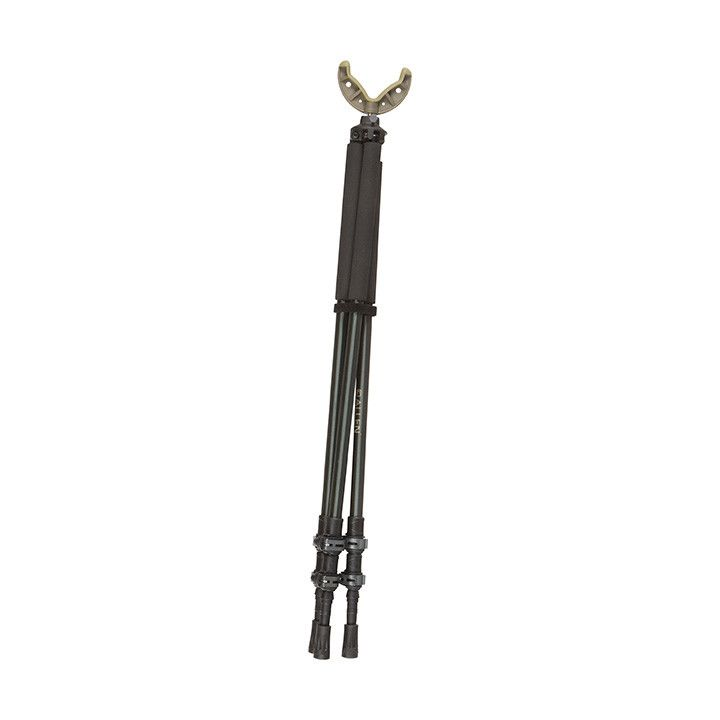
Upon unboxing, the Allen Axial Shooting Stick – Tri/Bi/Monopod felt surprisingly light, thanks to its aluminum construction. The initial build quality seemed decent, though the plastic components on the leg locking mechanisms raised some concerns. The removable rifle cradle was a nice touch, adding to its versatility.
Compared to the Primos Trigger Stick Gen 3 (a pricier option) and a basic, fixed-height bipod, the Allen Axial Shooting Stick – Tri/Bi/Monopod stood out due to its modularity. While the Primos offers faster deployment, the Allen promised more configurations. The fixed bipod was simpler but lacked adjustability.
My first impression was cautiously optimistic. I was excited by the potential but concerned about the sturdiness and reliability of the leg locking system, especially after seeing the user feedback about legs flopping. Time in the field would tell.
Real-World Testing: Putting Allen Axial Shooting Stick – Tri/Bi/Monopod to the Test
First Use Experience
I first tested the Allen Axial Shooting Stick – Tri/Bi/Monopod on a prairie dog hunt in eastern Montana. The terrain was a mix of short grass, rocky patches, and uneven ground, providing ample opportunity to test its stability and adaptability. The wind was moderate, around 15 mph, adding another element to the challenge.
The shooting stick performed adequately as a monopod on relatively flat ground, offering a decent amount of stability for shots out to 300 yards. However, when configured as a bipod or tripod on uneven terrain, the lack of leg locks became immediately apparent. The legs tended to splay outwards, requiring constant readjustment and undermining the stability.
Using it was more cumbersome than anticipated. The absence of leg locks required constant vigilance to maintain a stable platform, negating the benefit of a quick setup. The rifle cradle was easy to use and accommodated my rifle well.
After the first use, I was disappointed. The lack of secure leg locks was a significant drawback, impacting usability and stability. The concept was excellent, but the execution fell short.
Extended Use & Reliability
After several weeks of use on various hunts and at the range, the Allen Axial Shooting Stick – Tri/Bi/Monopod showed minimal signs of wear and tear on the aluminum components. However, the plastic leg joints started to exhibit some looseness. This further exacerbated the leg splay issue.
The durability of the aluminum tubing seemed sufficient, resisting bending or damage from impacts. Cleaning was straightforward. Mud and dirt were easily wiped off with a damp cloth.
Compared to my previous experience with a sturdier, albeit heavier, tripod system, the Allen Axial Shooting Stick – Tri/Bi/Monopod was a disappointment in terms of stability. While the weight savings were noticeable, the lack of reliable leg locks compromised its overall performance. It simply couldn’t replace a dedicated, robust tripod.
Breaking Down the Features of Allen Axial Shooting Stick – Tri/Bi/Monopod
Specifications
The Allen Axial Shooting Stick – Tri/Bi/Monopod is manufactured by Allen. Its primary material is Aluminum.
It measures 61 inches in length when fully extended. The listed specifications include a monopod that extends from 33.5-inches to 61-inches.
The product’s listed features include a removable monopod with 3/8-16 thread size. It also includes Aluminum locking cams.
The product includes a Carbide tip & rubber boot. The Allen post attachment system can be used with cameras, spotting scopes, or any additional equipment with 3/8-16 thread size.
These specifications are important because they dictate the shooting stick’s versatility and portability. The aluminum construction keeps the weight down, while the modular design allows for adaptation to different shooting scenarios. The thread size compatibility ensures compatibility with other gear.
Performance & Functionality
The Allen Axial Shooting Stick – Tri/Bi/Monopod performs adequately as a monopod on relatively flat and stable ground. However, its performance suffers significantly as a bipod or tripod due to the lack of reliable leg locks. These legs lead to instability and require constant readjustment.
The main strength is its modularity, allowing users to switch between monopod, bipod, and tripod configurations. Its weakness is the unreliable leg locking system that compromises its stability in all but the monopod configuration. The user feedback that “the legs flop around” is, unfortunately, very accurate.
Ultimately, it only partially meets expectations. It delivers on the promise of modularity but falls short on providing a consistently stable shooting platform.
Design & Ergonomics
The build quality is decent for the price point, with sturdy aluminum tubing. The plastic components, particularly the leg joints and locking cams, feel less robust and are potential points of failure.
The Allen Axial Shooting Stick – Tri/Bi/Monopod is relatively user-friendly. There is a slight learning curve in assembling and disassembling the different configurations, but overall it’s intuitive.
Durability & Maintenance
The aluminum construction suggests reasonable longevity for the main frame of the Allen Axial Shooting Stick – Tri/Bi/Monopod. The plastic components are the likely limiting factor in its overall lifespan.
Maintenance is straightforward, requiring only occasional cleaning to remove dirt and debris. Repairing the plastic components might be challenging, as replacement parts may not be readily available.
Accessories and Customization Options
The Allen Axial Shooting Stick – Tri/Bi/Monopod comes with a removable rifle cradle and a carbide tip with a rubber boot. These provide stability on varied terrain.
The 3/8-16 thread size on the post attachment system allows for compatibility with cameras, spotting scopes, and other accessories with the same thread size. While there are no specific Allen branded accessories for this shooting stick, its compatibility with standard threads makes it open to customization. This thread size is a huge plus.
Pros and Cons of Allen Axial Shooting Stick – Tri/Bi/Monopod
Pros
- Versatile modular design: Converts between monopod, bipod, and tripod configurations.
- Lightweight aluminum construction: Easy to carry on long hunts.
- Affordable price point: Makes it accessible to budget-conscious hunters and shooters.
- Removable rifle cradle: Accommodates different firearm types and optics.
- Compatible with cameras and spotting scopes: Expands its usability beyond shooting support.
Cons
- Lack of reliable leg locks: Leads to instability and requires constant readjustment.
- Plastic components: May compromise long-term durability.
- Limited stability as a bipod or tripod: Not suitable for challenging terrain or long-range shooting without modification.
Who Should Buy Allen Axial Shooting Stick – Tri/Bi/Monopod?
The Allen Axial Shooting Stick – Tri/Bi/Monopod is perfect for hunters or recreational shooters who primarily shoot from a monopod position on relatively flat terrain. Also, shooters looking for an entry-level, modular system that won’t break the bank could find it useful.
Those who need a rock-solid, stable bipod or tripod for challenging terrain or long-range shooting should skip this product, unless they are prepared to modify the leg locking system. Serious backcountry hunters should invest in a more robust and reliable system.
A must-have modification would be to find or create a locking mechanism for the legs to prevent them from splaying outwards. Adding a paracord tether between the legs to limit their spread is a simple, but effective, modification.
Conclusion on Allen Axial Shooting Stick – Tri/Bi/Monopod
The Allen Axial Shooting Stick – Tri/Bi/Monopod is a mixed bag. The promise of a versatile, modular shooting support is appealing, but the lack of reliable leg locks significantly hinders its performance.
The price is justified for the materials and modularity, but the user will have to decide if the trade-off in stability is worth it. This will depend on the shooter’s needs and planned use.
I would only cautiously recommend it to shooters on a very tight budget who primarily need a monopod. Unless they are willing to invest time and effort in modifying the leg locking system to improve its stability, a more robust system is worth the investment. Don’t be afraid to spend extra to get something solid!