
Let’s Dive into Explorer Scout Sighting Compass
Navigating the wilderness requires more than just a sense of adventure; it demands reliable tools. The Explorer Scout Sighting Compass, manufactured by Explorer, promises to be just that. For a price point that barely makes a dent in your wallet ($4.99), this compass aims to guide you back to base camp safely and accurately.
My need for a dependable yet inexpensive compass arose from a series of youth group outings I lead. Time and time again, I witnessed young adventurers relying solely on their smartphones for navigation, which are unreliable in the backcountry. I was in search of an affordable, accessible tool to teach basic orienteering skills and instill confidence in their ability to navigate independently.
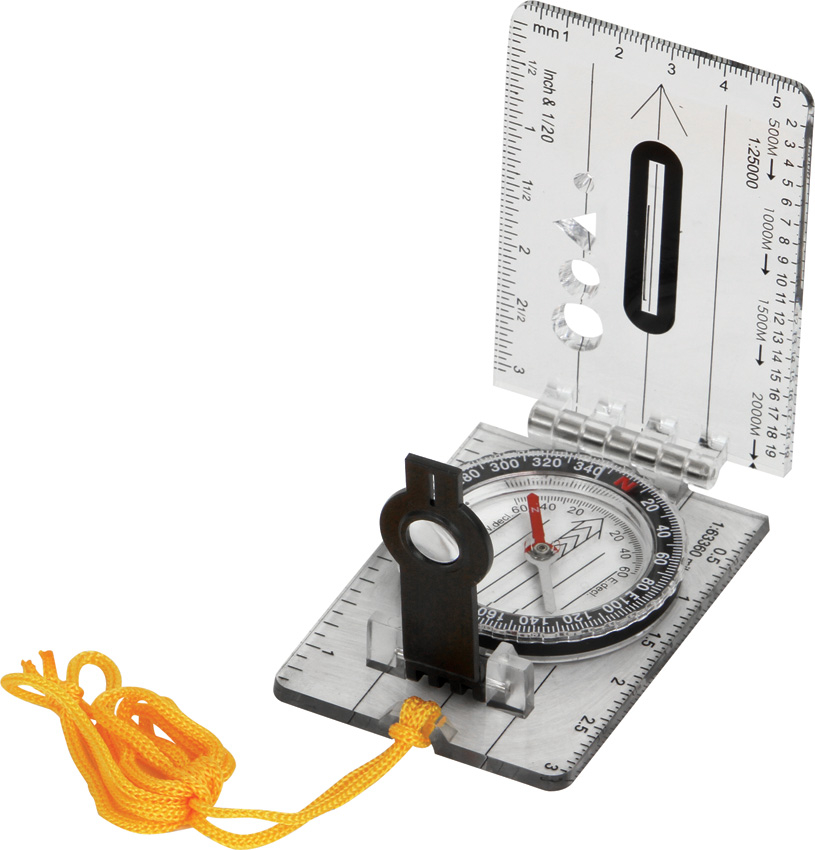
Upon receiving the Explorer Scout Sighting Compass, my initial impression was that of a compact and lightweight tool. The plastic construction felt sturdy enough for its intended purpose, which is teaching basic orienteering and providing backup navigation. The closed length of 3.25 inches makes it highly portable, fitting easily into a pocket or pack.
Compared to higher-end compasses with features like adjustable declination or liquid-filled capsules, the Explorer Scout Sighting Compass is a basic model. However, competing budget compasses often lack a sighting mechanism altogether, a crucial feature for accurate bearing. I chose this compass because of its simplicity, affordability, and the inclusion of a sighting feature, making it ideal for introductory instruction.
My first impression was cautiously optimistic. While it lacked the refined feel of professional-grade compasses, its simplicity and low cost were immediately appealing. I was eager to see how it would perform in the hands of novice navigators.
Real-World Testing: Putting Explorer Scout Sighting Compass to the Test
First Use Experience
I first tested the Explorer Scout Sighting Compass during a weekend orienteering workshop I conducted with a group of scouts. We used it in a local park with varying terrain, including wooded areas and open fields. We worked through several simple orienteering excersizes using the compass in tandem with marked maps.
The compass performed adequately in dry conditions, however the light plastic construction caused some issue with steadiness on a cold, windy day. This made reading the dial more difficult. The relatively small size of the compass required steady hands.
The learning curve was minimal. After a brief demonstration, the scouts quickly grasped the basics of sighting and taking bearings, which was greatly assisted by the sighting feature. The small baseplate, however, proved challenging for some scouts to consistently align on the map.
The only real issue encountered was that in bright sunlight, the plastic dial was difficult to read clearly due to reflection. This required the user to shade the compass with their hand.
Extended Use & Reliability
After several months of intermittent use during scouting events and personal hikes, the Explorer Scout Sighting Compass has held up reasonably well. Given its low price point, I expected some signs of wear and tear, but it remained functional.
The plastic casing has shown a few minor scratches, but no significant damage. The compass needle still spins freely, and the sighting mechanism remains intact.
Maintenance is minimal. I simply wipe it clean with a damp cloth after each use. Given the non-sealed construction, I avoid exposing it to excessive moisture or extreme temperatures.
Compared to more expensive compasses I’ve used in the past, the Explorer Scout Sighting Compass doesn’t offer the same level of precision or durability. However, it has proven to be a reliable tool for basic navigation and teaching purposes. It’s certainly not something I’d rely on in a true survival situation, but for casual use and educational scenarios, it performs adequately.
Breaking Down the Features of Explorer Scout Sighting Compass
Specifications
- Manufacturer: Explorer.
- Closed Length: 3.25 inches. This compact size makes it easy to carry in a pocket or backpack.
These specifications highlight the Explorer Scout Sighting Compass’s primary purpose: portability and simplicity. It’s designed to be a readily accessible tool for basic navigation, not a high-precision instrument.
Performance & Functionality
The Explorer Scout Sighting Compass functions as a basic directional tool. Its main strength lies in its simplicity and ease of use, making it suitable for beginners.
The sighting mechanism, though rudimentary, allows for more accurate bearing than a compass without one. A clear weakness is the lack of adjustable declination, requiring users to manually account for magnetic variation.
For basic navigation and educational purposes, it meets expectations. It’s not a replacement for a professional compass, but it provides essential directional guidance.
Design & Ergonomics
The Explorer Scout Sighting Compass features a simple, utilitarian design. The plastic construction is lightweight but feels somewhat fragile.
The compass is easy to hold and operate, but the small size can be a disadvantage for those with larger hands. There is no significant learning curve associated with its operation.
Durability & Maintenance
Given its plastic construction and low price point, the Explorer Scout Sighting Compass isn’t designed for extreme durability. With proper care, it should last for several years of occasional use.
Maintenance is minimal, requiring only occasional cleaning. Disassembly for repair isn’t recommended.
Accessories and Customization Options
The Explorer Scout Sighting Compass doesn’t come with any additional accessories. The simple design doesn’t lend itself to customization options.
It is not compatible with any specialized accessories. Its primary function is standalone directional navigation.
Pros and Cons of Explorer Scout Sighting Compass
Pros
- Extremely affordable, making it accessible to everyone.
- Simple and easy to use, ideal for beginners and educational purposes.
- Compact and lightweight, ensuring easy portability.
- Includes a sighting mechanism, improving bearing accuracy compared to basic compasses.
- Provides a reliable backup navigation tool when electronics fail.
Cons
- Plastic construction feels somewhat fragile and lacks durability.
- No adjustable declination, requiring manual calculation of magnetic variation.
Who Should Buy Explorer Scout Sighting Compass?
The Explorer Scout Sighting Compass is perfect for scout leaders, casual campers, beginner hikers, and anyone who needs a basic, affordable compass for introductory orienteering. It is ideal for educational purposes and as a backup navigation tool.
Those who should skip this product include experienced outdoorsmen, survivalists, and anyone requiring high-precision navigation in demanding environments. These users would benefit from investing in a more durable and feature-rich compass.
There are no must-have accessories for this compass. However, pairing it with a map and basic orienteering instructions enhances its usability.
Conclusion on Explorer Scout Sighting Compass
The Explorer Scout Sighting Compass offers exceptional value for its price. While it lacks the advanced features and durability of higher-end models, its simplicity, affordability, and sighting mechanism make it a worthwhile purchase for beginners and casual users.
At $4.99, the price is more than justified. It’s a small investment that could potentially make a big difference in a navigation situation.
I would personally recommend the Explorer Scout Sighting Compass to anyone looking for an inexpensive, easy-to-use compass for basic navigation and educational purposes. It’s a great way to introduce young adventurers to the fundamentals of orienteering and ensure they have a reliable backup when exploring the outdoors. So, grab an Explorer Scout Sighting Compass, a map, and get out there and explore the world! Just don’t forget to teach someone else how to use it, too.